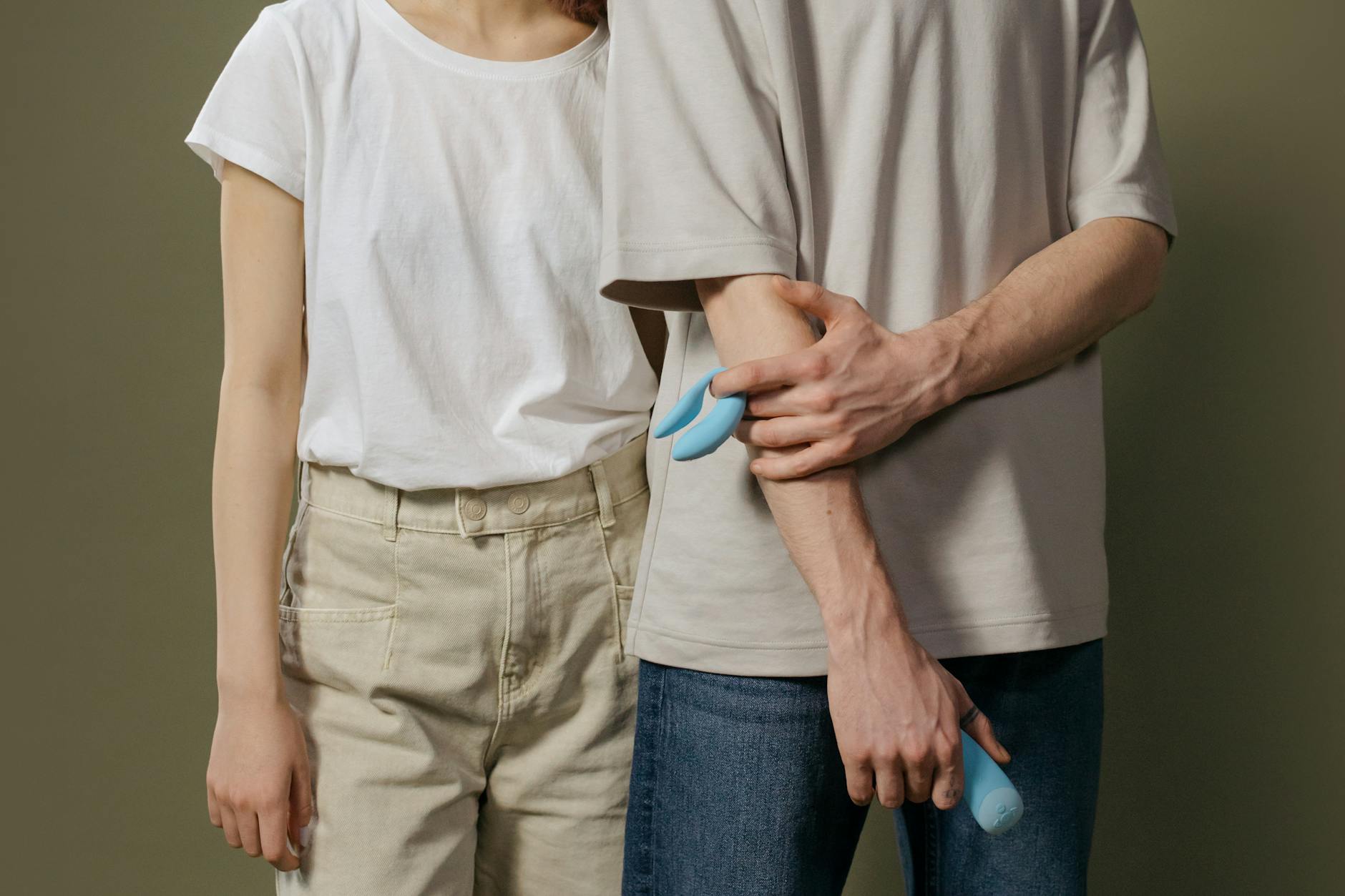
Here's what nobody tells you about introducing a lemon vibrator to partnered sex
Yes. It feels wildly different. Not worse, not better, just different in ways that matter. Your nervous system responds differently when someone else is in the room. The pressure you feel, the attention you're managing, the vulnerability equation. It all shifts.
The good news: knowing what's changing lets you navigate it without shame or confusion.
The sensations actually feel different
Let me separate the physical from the psychological first, because they're tangled together but they're not the same thing.
When you use a lemon suction vibrator alone, your nervous system is in a very particular state. You control everything. The speed. The pressure. When to build, when to pause. When you bring a partner into that equation, even if they're not touching the device, your body registers the presence differently.
Here's the neuroscience part without the jargon: your brain is processing two streams of input simultaneously now. The sensation from the lemon vibrator itself, plus the awareness of being watched or touched or cared for by another person. That dual processing can make sensations feel sharper in some moments and softer in others.
Some people report that the suction feels more intense with a partner present. Others say it feels gentler because they're more relaxed. Both are true depending on the person, the partner, and what's happening emotionally in the relationship.
Arousal takes a different path
When you're solo, arousal is usually linear. You build from point A to point B to point C. With a partner, even just psychologically, arousal becomes more responsive. You're tracking their reaction alongside your own sensation. You're negotiating what happens next. You're managing vulnerability.
Some people find this deepens the experience. They feel more turned on because the intimacy is real. Others find it distracting because managing another person's attention takes cognitive bandwidth away from their own pleasure.
Here's what I've observed clinically: the people who have the best time with lemon vibrators as a couple are the ones who've already done the unglamorous work of talking about sex outside the bedroom. They've named what they want. They've talked about what a lemon clitoral vibrator can do. They've said out loud, "I want you to use this on me," without turning it into a referendum on the relationship.
That conversation happens before clothes come off. Not because it's sexy to discuss mechanics in advance, but because trying to negotiate in real time is nearly impossible. Your brain is offline. Your partner is anxious about whether they're doing it right. Everyone loses.
The vulnerability piece is real
Using a lemon vibrator solo is private. You're in control of every variable. You know exactly what feels good because you've figured it out on your own timeline.
With a partner, you're asking them to witness your pleasure and participate in it. That's a different vulnerability than most people are trained for. We're taught to perform pleasure, not receive it openly.
Many people feel awkward the first time. You might worry about how long it's taking, or whether your face looks strange, or if they're bored. These thoughts are normal and they're also usually not happening on their end. They're usually just focused on you.
What helps: permission. Explicitly agreeing beforehand that this is going to feel weird sometimes and that's okay. That you might laugh. That you might ask them to stop and restart. That you're learning together.
I worked with a couple recently where the woman felt self-conscious every time her partner brought out the lemon vibrator. She'd tense up. The sensation changed because her nervous system wasn't safe. Once they talked about it, and he said something simple like "I love watching you feel good," the entire dynamic shifted. It wasn't magic. It was just clarity about what was actually happening.
Who controls the device matters more than you think
If you're using the vibrator on yourself while your partner is present, the power dynamic stays with you. You're leading. They're supporting.
If your partner is using the lemon suction toy on you, the dynamic shifts. They're directing speed, pressure, duration. Some people love this because it removes decision-making. Others hate it because loss of control feels risky.
There's no right answer. Some couples rotate. Some partners always have the device in their hand. The key is knowing which version works for you and being honest about it.
What doesn't work is pretending you're fine with something when you're not. If you hate the sensation of someone else controlling the pressure, say that. If you love the release of not having to manage it yourself, name that. The conversation is unsexy. The result is better sex.
Communication shifts everything
Here's what separates couples who enjoy lemon vibrators together from couples who try once and bench the whole idea: they talk about it.
Not a one-time conversation. Ongoing. "That felt really good when you..." or "Next time I want you to..." or even "I wasn't feeling it tonight and I'm not sure why." Some of that communication happens mid-sex. Some happens the next morning.
The couples I work with who have the best time with clitoral vibrators are also the couples who've practiced asking for what they want in other contexts. They can say no. They can ask for adjustments. They're not managing their partner's feelings while also trying to come.
If you haven't had that foundation yet, a lemon vibrator is actually a gift. It forces that conversation. You can't use one effectively with a partner and also avoid the vulnerability of stating your needs.
Some practical communication scaffolds: "I like when you..." "Can we try..." "Tomorrow I want to..." "Not tonight." None of these are complicated sentences, but they're the ones that actually matter.
Solo pleasure doesn't disappear
One thing I want to flag clearly: introducing a lemon vibrator to partnered sex does not mean your solo pleasure has an expiration date.
Some people prefer the device alone. Some rotate depending on mood. Some use it with a partner one week and solo the next. All of that is normal and fine.
The people who struggle are the ones who assume that once a partner is involved, solo exploration is supposed to stop. It's not. Your ability to know your own body and pleasure independently is actually what makes partnered sex better. You have information. You know what works. You can communicate it clearly.
If you're in a relationship and you've stopped using a lemon vibrator solo, and that bothers you, that's worth examining. Not necessarily with a therapist, but at minimum with yourself. What changed? Did you make a choice or did you assume one?
When the lemon vibrator improves the whole relationship
I've seen couples who were mostly disconnected physically start using lemon clitoral vibrators together and become closer. Not because the vibrator is magic, but because it forced them to be present with each other in a specific way.
They had to talk about desire. They had to show up for each other's pleasure. They had to stay present instead of checking out mentally. That foundation translates to everything else.
I've also seen couples where adding a toy didn't fix anything because the real problem wasn't about the physical experience. It was about resentment or avoidance or unresolved conflict. A lemon vibrator won't repair a broken relationship. But a healthy relationship can use it as another way to connect.
FAQ
Is it weird to use a lemon vibrator with your partner if you've never used one solo?
Not weird, just harder. Using a lemon suction vibrator solo first gives you information about what sensation you like, what speed works, how long you want to build. Bringing that knowledge into partnered sex makes it easier. If you haven't used one before, try it solo first. A few times. Then bring it to your partner once you know what you're working with.
Will my partner think I need a lemon vibrator because they're not enough?
Maybe they'll think that if you haven't talked about it beforehand. Frame it differently. "I want to try this with you" is different than "I need this because you're not working." The former is expansion. The latter is criticism. If your relationship is solid and you're clear about wanting to explore together, most partners feel included rather than replaced.
How do I ask my partner to use a lemon vibrator on me if we've never talked about toys?
Start small. You don't need to have a formal meeting. Try something like "I've been curious about trying something," or "I read about these lemon clitoral vibrators and they sound interesting. Would you want to try one together?" If they say no, that's information. If they say yes, you've opened a door. Then you can get specific. See the internal link below on how to use a lemon clitoral vibrator for the first time to get more practical steps.
What if I want to use a lemon vibrator but my partner seems uncomfortable?
Ask directly. "You seem hesitant. What's going on?" They might feel insecure. They might not understand what it does. They might have their own hang-ups about toys or pleasure. All of those are fixable with conversation. Some partners warm up once they realize the vibrator enhances sensation, not replaces them. Others stay uncomfortable and that's also valid. You get to decide if that's a dealbreaker.
Can using a lemon vibrator with a partner hurt our sex life if we break up?
No. Your ability to know your own pleasure is not dependent on a specific partner. The conversations you have, the vulnerability you practice, the information you gather about your body. All of that stays with you. If anything, it makes you a better partner in the next relationship.
Should we keep the lemon vibrator visible or hidden?
That's a values question, not a pleasure question. Some couples are comfortable with toys visible. Some prefer them in a drawer. Some live with roommates and hide everything. There's no rule. Just decide together what works for your living situation and your comfort level.
The bottom line
A lemon vibrator does feel different with a partner. Your nervous system is more activated. Your attention is divided. The sensations shift because you're processing more information at once.
What makes that difference worth exploring is the communication it requires. You have to be honest about what you want. You have to stay present. You have to trust that your partner's job is to support your pleasure, not judge it.
If you're thinking about trying a lemon clitoral vibrator with a partner, start with the conversation. Say what you're curious about. Listen to what they say. Then decide together. Most partners appreciate being included in the exploration rather than surprised by it.
Your pleasure matters. Their willingness to show up for it matters. The device is just a tool that makes both of those things easier to practice.
If you're navigating this territory and want support thinking through the communication piece, we're here to help. Reach out at /contact.