Let's start with what your body actually went through
Postpartum vulvas don't look or feel like they did before. Whether you delivered vaginally, had a C-section, or experienced tearing, your tissues are inflamed, tender, and hypersensitive. Nerve endings are firing differently. Scar tissue may be forming. Hormones are in free fall. And somewhere in the middle of all this, you're supposed to want sex again.
Here's the thing: you don't have to want it right away. But when you do, lemon clitoral vibrators work differently for postpartum bodies than they do for anyone else. Understanding why matters.
Why sensitivity spikes after delivery
Three things happen at once. First, estrogen crashes. Your body shifts from a nine-month hormonal peak to baseline, which means thinner, drier tissue almost overnight. Second, if you tore or had an episiotomy, healing tissue is exquisitely sensitive because it's still binding itself back together at a cellular level. Third, if you're breastfeeding, prolactin keeps estrogen suppressed, which compounds the dryness and sensitivity.
That sensitivity isn't a bug. It's your nervous system being protective. And it means direct vibration, no matter how gentle, can actually feel invasive rather than good.
This is where lemon suction vibrators solve a specific postpartum problem.
How suction works differently than traditional vibration
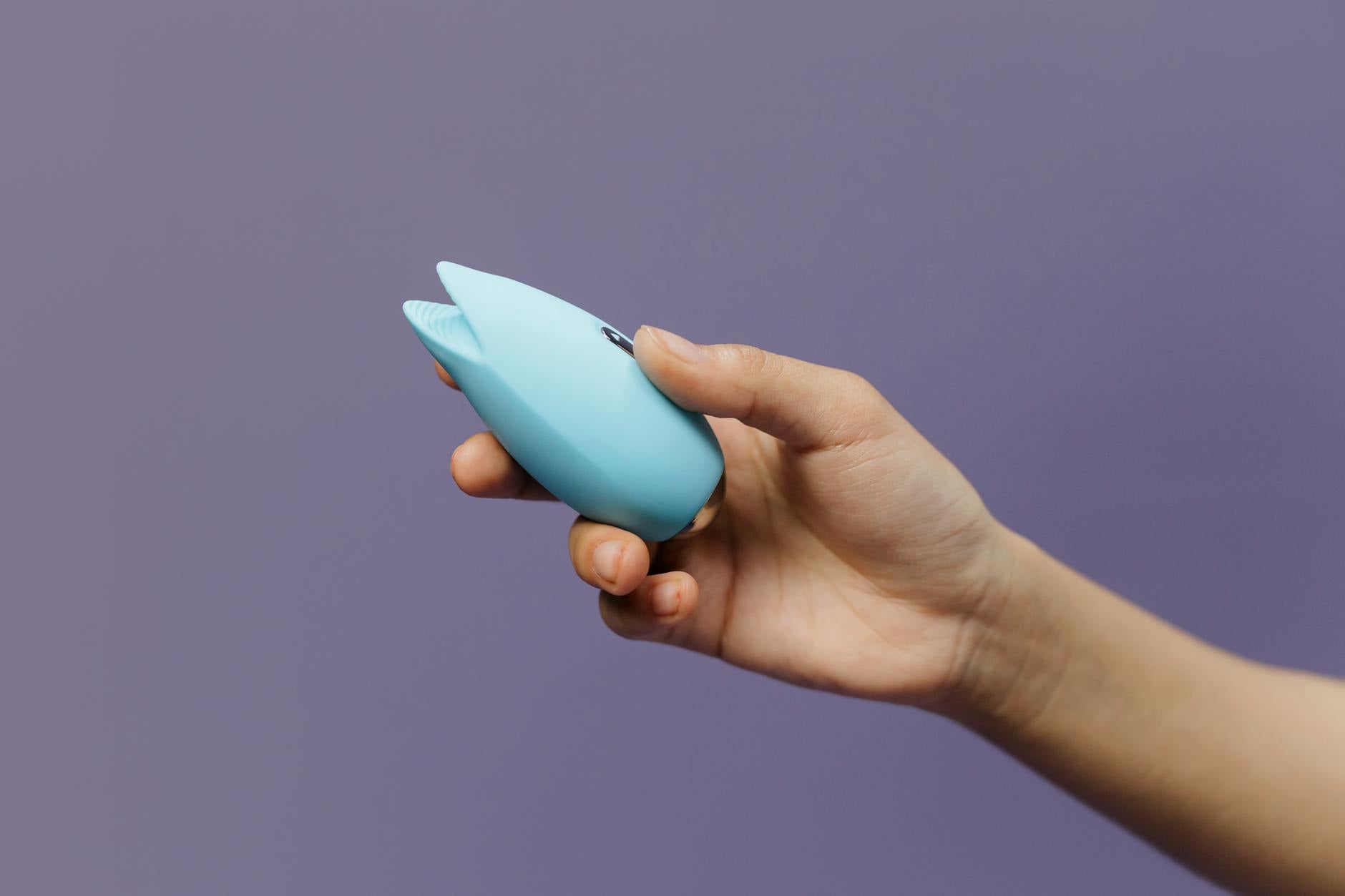
Traditional clitoral vibrators buzz directly against tissue. Lemon suction vibrators like the Hello Nancy Lem create a gentle seal and pulse rhythm without direct friction. For postpartum vulvas, this distinction is everything.
When tissue is tender and healing, direct vibration can trigger pain or irritation after just a few minutes. Suction stimulates the clitoris and surrounding nerve endings through gentle rhythm and pressure changes, not friction. You get sensation without the mechanical stress that raw, healing tissue can't handle.
Many postpartum people who've tried traditional vibrators before tell me they were shocked how different the lemon clitoral vibrator experience felt. Less jarring. More like your own body working with you instead of against you.
The physical healing timeline that matters
Your midwife or OB probably told you six weeks before sex. That's the minimum. But healing isn't linear, and postpartum vulvas are genuinely different at week four versus week twelve.
Weeks 1-4: Don't touch anything. Your body needs space.
Weeks 4-8: If you've gotten the all-clear and there's no pain, gentle external exploration is fine. Skip vibration entirely. Your vulva is still very much in repair mode.
Weeks 8-12: This is when many people can introduce gentle, low-intensity stimulation. The lemon clitoral vibrator on its lowest pattern (pattern 1 or 2) becomes an option, not a pressure.
Week 12+: Tissue has generally healed enough that you can explore higher patterns, longer sessions, and more consistent stimulation.
These timelines assume normal healing with no complications. Tearing, episiotomy, or infection extends everything. Talk to your provider before introducing any toy.
Why pattern matters more than intensity
The Hello Nancy Lem has seven patterns. Postpartum, the rhythm matters more than the strength. Patterns with longer pulses and slower cadence let you work with your body's arousal timeline instead of fighting sensitivity.
Start with pattern 1: a slow, steady pulse. It's not exciting. That's the point. Your nervous system needs time to recognize sensation as safe and pleasurable rather than alarming.
As healing continues, you might find pattern 3 or 4 (faster pulses with micro-rhythms) feels better than raw intensity. The complexity of the rhythm can be more satisfying than power when tissue is delicate.
Skip pattern 7 for at least three to four months. It's designed for bodies that have reached full sensation baseline. Postpartum bodies aren't there yet.
Lubrication, water-based always
Breastfeeding tanks estrogen, which tanks natural lubrication. Even if you're not breastfeeding, hormonal shift after birth leaves vulvas drier than baseline.
Water-based lube becomes non-negotiable. Not because something's wrong with you. Because lube reduces friction on healing tissue and makes suction work more smoothly. A quality water-based lube also won't damage the silicone on lemon sexual toys.
Apply generously. More than you think you need. Your postpartum vulva deserves it.
Scar tissue, sensitivity, and when to pause
If you tore or had an episiotomy, scar tissue can bunch and create pockets of heightened sensitivity. You might notice that one spot, or one pattern, feels sharp or uncomfortable while everything else feels fine.
That's information. Not a reason to force through it.
Pause. Wait a week. Try again. Your nervous system is still learning what healed tissue feels like. Sometimes those sharp sensations soften with time. Sometimes they're telling you that spot needs more healing time.
A pelvic floor physical therapist trained in scar tissue work can make an enormous difference here. Many postpartum people skip this step and wonder why sensation never quite normalizes. Scar tissue mobilization, done right, genuinely changes the experience.
The mental piece nobody talks about
Your vulva changed. Your body changed. You might be touched out from a baby, or nursing every two hours, or just exhausted. And somewhere in your head, there's probably a voice saying you should want to have sex again because your body's "healed."
Healing and desire are different things.
Your nervous system needs permission to want pleasure again. That permission often comes in the form of time alone, no pressure, no performance, just exploration. The lemon clitoral vibrator becomes a tool for that conversation with your own body, not a shortcut back to before.
Many postpartum people tell me their first solo experience with a lemon suction vibrator didn't produce an orgasm. It produced recognition. A quiet moment where their body said, "Oh, I still work." That's healing too.
When to check in with a provider
If pain persists beyond eight weeks, or if suction creates burning, sharp sensations that don't soften over time, that's worth a conversation with your OB or midwife. Postpartum vulvodynia is real and treatable. Scar tissue problems are real and treatable.
You don't have to figure this out alone. A provider trained in postpartum sexual health can often spot what's happening and recommend targeted physical therapy or other support.
Your pleasure matters. Your healing matters more. But the two aren't in competition. With patience, the right tools, and real information, you get both.
FAQ
How soon after postpartum can I use a lemon clitoral vibrator?
Most providers clear external stimulation around eight to ten weeks postpartum, assuming no complications. Even then, start with the lowest pattern and shortest sessions. Your vulva is still healing even when it looks normal on the outside. If your recovery involved tearing, episiotomy, or infection, wait longer and check with your provider before introducing any toy.
Will a lemon vibrator cause reopening of tears or episiotomy scars?
Unlikely if you're gentle and following your provider's timeline. Suction vibrators create less mechanical stress than traditional vibrators because they work through pressure and rhythm rather than direct friction. That said, your scars are your own. If something feels sharp or wrong, stop. Tissue that's truly healed can tolerate gentle suction. Tissue that's not ready will tell you.
Can I use a lemon suction vibrator while breastfeeding?
Yes, once you're cleared for external stimulation. Breastfeeding suppresses estrogen, so lubrication will be lower than baseline. Use more water-based lube than you think you need. Sensitivity might be higher too, so stick to lower patterns. Nothing about using a lemon adult toy while nursing affects milk supply or safety.
What if stimulation feels painful or sharp even on the lowest pattern?
Stop and wait. That sharp sensation usually means scar tissue, residual inflammation, or your nervous system saying "not yet." Try again in a week. If pain persists beyond eight weeks, talk to your provider. Pelvic floor physical therapy can often resolve postpartum vulva pain that feels stuck. Don't push through sharp pain. Pleasure should feel good, or at least comfortable.
Is it normal that postpartum orgasms feel different or harder to reach?
Completely normal. Your hormones are different. Your nerve sensitivity is recalibrating. Your brain might be touched out or anxious. Any of those things slow arousal and change orgasm intensity. The lemon clitoral vibrator can help rebuild that pathway, but it's not a magic fix for all of it. Time, patience, and often a conversation with your partner or therapist helps too.
How do I introduce a lemon vibrator to my partner after postpartum when we haven't had sex yet?
Honestly and plainly. "My body is still healing. When we do reconnect, I'm going to need things to be really gentle. I want to explore with this tool first, solo, to figure out what feels good now." Most partners appreciate the honesty. You're not rejecting them. You're protecting yourself and the rekindling of intimacy. That's the opposite of rejection.
The real recovery timeline
Postpartum isn't four to six weeks. It's months. Your vulva isn't "back to normal" at any point because it's not the same vulva anymore. It's a vulva that carried life and healed from it. That's different. And with the right information and tools, like the Hello Nancy Lem, you can rebuild pleasure in a way that honors how your body actually works now, not how it worked before.
Your pleasure matters. Start there.