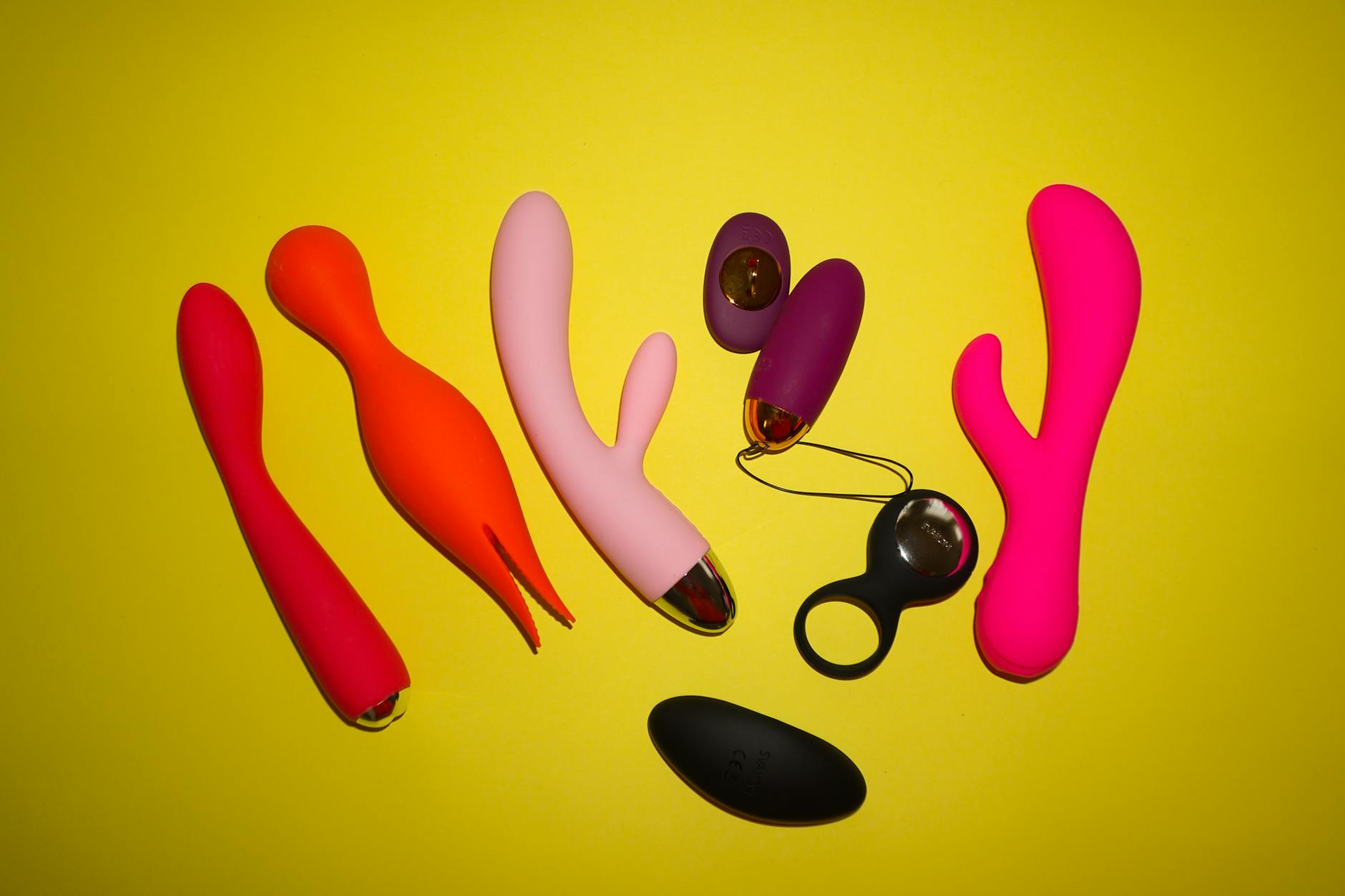
Why vibration patterns matter more than you think
Honestly, most people buy a lemon vibrator and use one pattern for years. Here's the thing: your clitoris has about 8,000 nerve endings concentrated in an area smaller than a fingertip. Each one responds differently to rhythm, intensity, and frequency.
Different vibration patterns are like different keys on a piano. Some unlock shallow pleasure, others go deep. Some build slow, others hit fast and hard. The magic happens when you figure out which patterns your nervous system lights up for.
Understanding clitoral nerve clusters
Your clitoris isn't just the visible bump you see. The internal structure looks more like a wishbone, with nerve clusters running internally along the vaginal walls and extending upward. The external glans (what touches your lemon vibrator) is the tip of a much larger system.
When you vary the vibration pattern, you're essentially changing which nerve clusters get stimulated and in what sequence. A steady rhythm hits the outer glans consistently. A ramp-up pattern activates the deeper internal clusters because the building stimulation creates expansion and sensitivity deeper inside.
This is why two people can use the same lemon clitoral vibrator and have completely different experiences. You're not broken if pattern three does nothing for you. You just haven't found your nerve-cluster match yet.
Pattern one: The steady hold
Most basic vibrators use one constant frequency, and there's a reason this works. Steady patterns activate the outer nerve endings in a predictable, meditative way. It's like a musical note held cleanly for eight bars.
The steady pattern on your lemon sucker feels different than a traditional vibrator because suction doesn't rely on side-to-side vibration. Instead, it creates micro-pulsations that draw tissue upward, which changes which nerve endings fire. You get sustained stimulation without the buzz fatigue that kills sensitivity on standard clitoral vibrators.
Best for: Building arousal without overwhelming the nervous system, longer sessions, and people who find constant high-frequency buzz numbing after a few minutes.
Pattern two: The ramp-up
This is where things get interesting. A ramp-up pattern starts gentle and increases in frequency or intensity over five to fifteen seconds, then either holds or cycles back down.
Neurologically, ramp-up patterns trick your nervous system into thinking stimulation is accelerating naturally. Your arousal deepens in response because your body interprets the building sensation as a sign that something bigger is coming. It's anticipation coded into rhythm.
The ramp-up also allows deeper nerve clusters to wake up gradually. If you went full intensity immediately, those internal nerve endings wouldn't have time to prepare, and you'd feel overstimulated on the surface. The slow climb gives everything time to engage.
Most people who use <a href="/blog/how-lemon-suction-vibrators-build-arousal-differently-than-traditional-toys">lemon suction vibrators find that ramp-up patterns create longer, stronger orgasms</a> because the buildup engages more of the nerve network. You're not just getting surface pleasure; you're recruiting the whole system.
Best for: Building toward intense orgasm, deeper satisfaction, people who like anticipation built into their experience.
Pattern three: The pulse
A pulse pattern stops and starts at regular intervals. Think morse code: stimulation, pause, stimulation, pause. The pause is the key element here.
During that pause, your nerve endings reset slightly. When stimulation returns, they fire again. This on-off rhythm can create what feels like waves of pleasure because each restart sends a fresh signal through your nervous system.
For people with sensitive tissue or those recovering from years of high-intensity vibrator use, pulse patterns are often more sustainable. Your nervous system doesn't fatigue as quickly because it gets micro-recovery periods built into the stimulation itself.
The pause also gives your brain time to register pleasure. Continuous stimulation can blur together into a single sensation. Pulse patterns create distinct moments of intensity, which many people find easier to follow toward orgasm.
Best for: Sensitive tissue, extended sessions, people who like rhythm and clarity over constant sensation.
Pattern four: The flutter
Flutter patterns are rapid micro-pulses that feel less like pulsing and more like gentle trembling. They sit somewhere between constant vibration and true pulsing.
These patterns activate a different type of nerve fiber than sustained vibration does. Your nervous system has fast-adapting and slow-adapting nerve endings. Constant vibration engages one; flutters engage both, which creates a more complex, textured sensation.
Flutter patterns also tend to feel gentler on sensitive tissue while still creating strong sensation. Because the stops and starts happen so quickly, it feels smoother than a true pulse but more stimulating than a steady hold.
Many people use flutter patterns as a way to ease into more intense patterns. It's the training-wheels version of ramp-up or pulse modes.
Best for: Sensitive tissue, warm-up stimulation, people who find constant vibration one-dimensional.
Pattern five: The wave
Wave patterns combine multiple frequencies at once, creating a sensation that moves or undulates. It might start intense on one side of the sensation spectrum, then shift to another frequency, creating the sense of movement.
Wave patterns engage multiple nerve clusters simultaneously because you're providing varied stimulation rather than uniform stimulation. Your nervous system is interpreting multiple inputs at once, which can feel more immersive.
These patterns are often where people find unexpected favorites. Because they're more complex, they're less likely to create the numbing effect that simple constant vibration can trigger over time.
Best for: People who've become desensitized to basic patterns, longer sessions, deeper satisfaction, those seeking novelty within a single session.
How to find your pattern
Start with the pattern you think won't work for you. Most people gravitate toward steady or ramp-up immediately, but your nervous system might light up for flutter or pulse instead.
Give each pattern at least two full sessions before deciding. Your brain needs time to interpret new rhythms. The first time a pulse pattern fires, your nervous system is still figuring out what it means. By the third time, you might realize it's actually your favorite.
Also pay attention to where you are in your cycle and what else is happening. A pattern that feels perfect on a relaxed Sunday might feel wrong on a stressful Tuesday when your nervous system is already activated. Your preferences shift based on stress levels, where you are hormonally, and what kind of arousal you're building toward.
Many people find they need different patterns at different points in a single session. You might start with flutter to wake things up, move to ramp-up to build intensity, then switch to pulse or wave for the final push. There's no rule that says you have to stay in one pattern.
The intensification sequence that actually works
If you're new to exploring patterns, here's a framework that tends to work well.
Start with whatever pattern feels gentle or neutral. Spend three to five minutes there, no pressure to climax. Let your body warm up and your arousal build naturally. This is your foundation.
Then shift to a ramp-up or flutter pattern for five to ten minutes. Let the rhythm build your anticipation. Your body should be responding more visibly now. Notice that.
Once you're deeply aroused, shift to your signature pattern. This is the one that historically takes you to orgasm. Stay there. Don't chase the feeling of constantly needing something new. That kills momentum.
<a href="/blog/lemon-vibrator-better-orgasms-after-50">Many people find that lemon vibrator orgasms after shifting patterns are stronger than single-pattern sessions</a> because you've engaged multiple nerve clusters and given your brain time to interpret multiple types of input.
When pattern preference changes
Your favorite pattern can shift over time, and that's not a sign that something's wrong. It's actually a sign that your nervous system is adapting and growing.
This is especially true if you use a lemon vibrator regularly. Your clitoral nerve endings adapt to repeated stimulation. That pattern that felt mind-blowing for six months might start feeling flat after a year. Instead of assuming you're broken, try patterns you dismissed before.
It's also common for pattern preferences to shift during menopause, after childbirth, during hormonal changes, or even just as you age. Your nerve sensitivity changes. Your arousal timelines change. Your nervous system's responsiveness shifts.
This is why a device with multiple patterns is an investment. You're not buying for your pleasure today; you're buying for your pleasure five years from now, when your preferences have evolved.
Common pattern mistakes
Here's what I see most often: people use the highest intensity from the jump and wonder why they stop feeling pleasure after ten minutes. Your nerve endings have desensitized. Start lower than you think you need. Build intensity. Save the highest settings for the final push.
Another mistake: assuming that if a pattern doesn't work immediately, it's broken or doesn't work for you. Most patterns need three to five exposures before your nervous system has actually learned how to respond. Stick with a new pattern for at least two sessions before deciding it's not for you.
The third mistake is staying loyal to one pattern forever. Pleasure adapts. Novelty within your session (switching patterns) and novelty across sessions (trying new patterns) keeps your nervous system engaged. This is especially true for people using <a href="/blog/lemon-vibrator-vs-traditional-clitoral-vibrators-suction-technology">lemon clitoral vibrators regularly</a>. The suction technology already creates a different sensation than traditional vibrators, but adding pattern variety deepens that advantage.
The science of pattern switching
When you shift patterns mid-session, you're essentially resetting the adaptation clock. Your nerve endings stop habituating to the current input, which means they respond freshly to the new input.
This is why many people report that they can have multiple orgasms more easily when they switch patterns. They're not fighting desensitization because they're constantly providing novel input.
It's also why extended sessions feel better than rushed ones. You have time to try multiple patterns, give each one real engagement, and let your arousal deepen across the full range of your clitoral nerve system rather than just the outer surface.
Your clitoris is intelligent. It knows the difference between routine and novelty. Pattern variety feeds that intelligence.
FAQ: Pattern Questions Answered
Which pattern works best for beginners using a lemon vibrator?
Start with steady or flutter. Both feel gentle and intuitive without requiring your brain to track complex rhythm changes. Once you're comfortable with basic sensation, move into ramp-up or pulse patterns. There's no rush to explore every mode in your first week.
Can you use the same pattern every session without desensitization?
Yes, but not forever. Most people can use their favorite pattern consistently for two to four months before nerve adaptation becomes noticeable. Then novelty becomes important. Switching patterns mid-session or exploring new modes every few weeks keeps sensation fresh.
Does pattern preference change during menopause?
Yes. Many people find that patterns they loved before menopause feel too intense afterward. You might need lower-intensity patterns, or patterns with built-in pauses (pulse, flutter) rather than constant vibration. This is completely normal and worth exploring with fresh patterns.
What if no pattern feels right?
Try adjusting intensity rather than pattern. Sometimes the issue isn't the rhythm; it's that you need gentler or stronger stimulation. Also consider timing. Pattern preferences shift based on stress, hormones, and arousal level. A pattern that feels wrong today might feel perfect in a week.
Can you combine patterns in a single session?
Absolutely. Most people find that starting with one pattern and shifting midway creates stronger pleasure. This is especially true for those using lemon suction vibrators, where combining steady suction with ramp-up or wave patterns creates layered sensation.
Is it normal to prefer gentler patterns as you age?
Yes. Nerve sensitivity changes over time, especially after menopause or certain health changes. Gentler patterns with intentional pauses often feel better than high-frequency constant vibration. This isn't a step backward; it's adaptation.
Your pattern exploration starts now
Instead of assuming your lemon vibrator has one "right" way to use it, treat each pattern as a different tool. Steady builds calm arousal. Ramp-up builds intensity and anticipation. Pulse creates clarity and rhythm. Flutter wakes up sensitivity. Wave engages complexity.
Your signature pattern is out there. Finding it is part of the pleasure, not something to rush through. Spend time with patterns that don't immediately click. Your nervous system is learning a new language.
Ready to dive deeper into your pleasure? The patterns are just the beginning. Let's talk about what else makes your body light up.