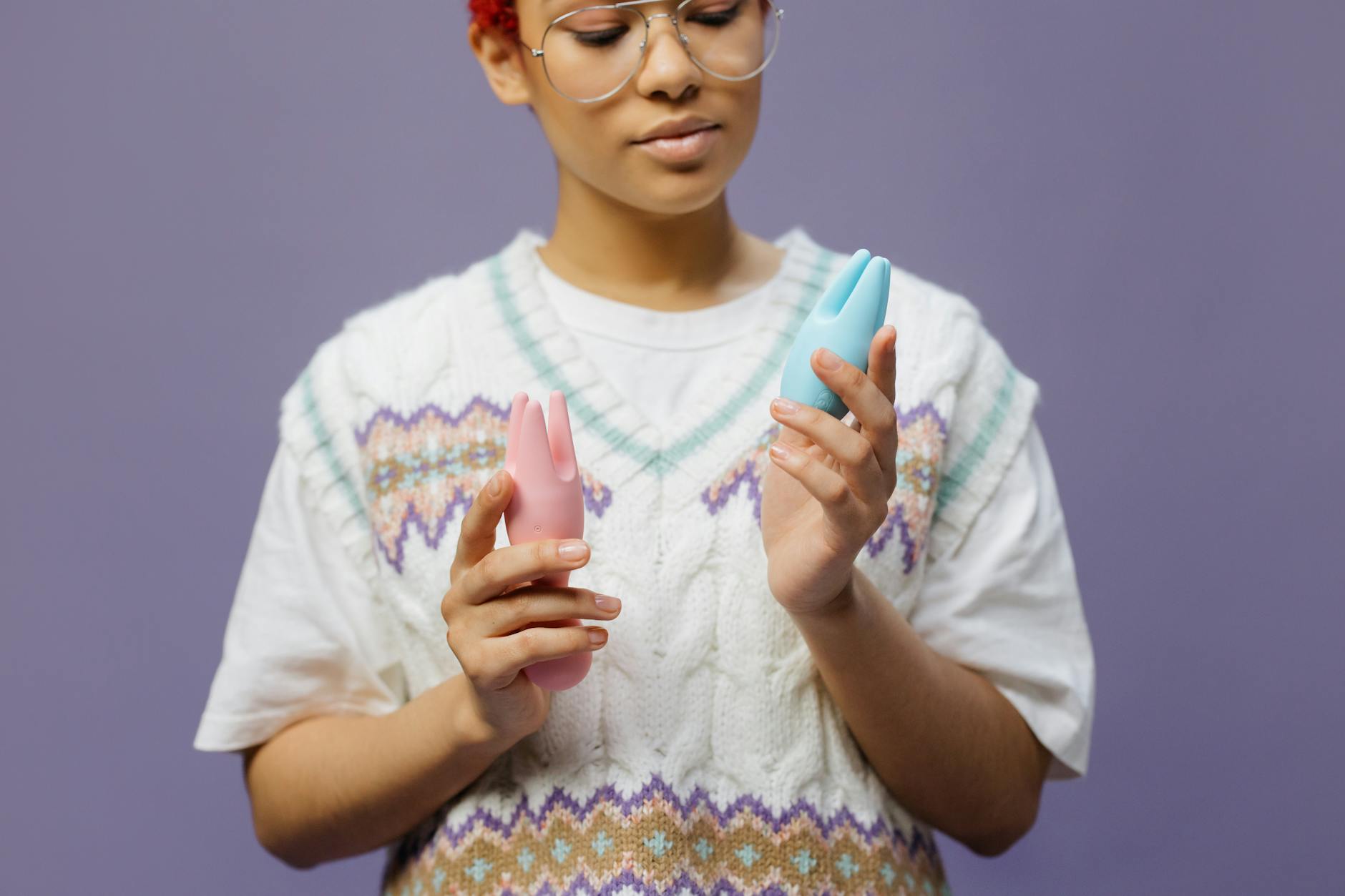
Let's talk about what happens after
Pain changes the body's relationship with pleasure. Whether that pain came from medical trauma, a difficult partner, assault, or years of physical incompatibility, the nervous system learns to brace. Arousal becomes harder. Touch feels dangerous even when you know intellectually that it shouldn't. Your brain is doing exactly what it's supposed to do: protecting you.
Recovery isn't about forcing pleasure back. It's about slowly, safely remapping the connection between touch and safety. And for a lot of people, lemon clitoral vibrators become part of that remapping process.
Here's why, and how to use them if this is your situation.
Why the body guards pleasure after pain
When you've experienced painful sex, your nervous system classifies genital touch as a threat. This isn't a mental block you can think your way out of. It's a protective reflex. Your pelvic floor tightens. Lubrication slows. Arousal flatlines. The body is doing its job. It's just that the job is to keep you safe from something that isn't happening anymore.
This response is especially strong if the pain was tied to a relationship context. Your brain connected a specific person, a specific environment, or even a specific time of day with pain. Now those contexts trigger the same bracing response, even in a new relationship or alone.
Trauma adds another layer. If the pain was non-consensual or involved a partner who ignored your signals, the nervous system learned that your "no" wasn't safe. Rebuilding pleasure means rebuilding the belief that your body's signals matter.
Why lemon vibrators work differently in recovery
Three things about lemon clitoral suction vibrators make them particularly useful during recovery:
1. They give you absolute control. You hold the intensity. You control the rhythm. You can start at the gentlest setting and move up only when your body feels ready, not when a partner expects you to. This control is not a small thing during healing. It's foundational. The nervous system learns: I decide when this happens. I can stop it instantly. My pleasure is not negotiable.
2. They work without penetration. If your trauma or pain was connected to penetration, traditional vibrators can trigger the same bracing response. Air-pulse suction toys like the Lem focus entirely on the clitoris. No internal pressure. No association with the pain. This separation matters. Your body can relearn pleasure in isolation from whatever caused the hurt.
3. They stimulate differently. Lemon suction vibrators don't vibrate. They create a gentle pulsing sensation that feels more like sustained pressure than the sharp buzz of a wand vibrator. For a nervous system in recovery, sustained, gentle pressure feels safer than rapid stimulation. It's easier to stay present instead of tensing up.
The pacing principle: how to rebuild sensation
Healing from painful sex or trauma is not about jumping back into intense pleasure. It's about graduated exposure to sensation in a safe container.
Start here: just touch. Not with any toy. With your own hand, clothed or unclothed, in a space where you feel completely safe and have total privacy. Spend a week or two just noticing what your body can feel without judgment. This isn't "foreplay." It's reacquaintance.
Then: introduce the Lem at its lowest setting. Hold it in your hand. Don't use it yet. Get used to the weight, the shape, the texture. Use it on other parts of your body first if that feels easier. Your forearm. Your neck. Somewhere neutral. The goal is to separate the object from pressure.
When you're ready: turn it on at pattern 1 (the gentlest rhythm) and hold it near (not on) your clitoris. Hover. Let your body notice the sensation without being engulfed by it. Stay there for as long as feels good. Thirty seconds. Two minutes. There's no quota.
Over time, as your nervous system learns that this sensation doesn't hurt, doesn't trap you, and doesn't require anything from you, light contact becomes possible. Direct contact follows. Longer sessions follow.
This isn't slow progress. This is the only progress that sticks.
When a partner is involved
If you're rebuilding pleasure with a partner present, the conversation matters more than the toy.
Your partner needs to understand that your nervous system is in recovery mode. This means: watching you use a lemon clitoral vibrator isn't about them. It's not a performance. It's not foreplay unless you say it is. It's healing work. Their job is to be present, respectful, and completely without expectation.
That boundary is not easy for a lot of partners to hold, especially if they've also been affected by the pain or trauma. A couples therapist can help navigate this. It's worth it.
Once your body starts responding again (and it will), the Lem becomes a bridge back to partnered intimacy. But only when you're ready. And on your terms.
What to watch for
If you're using lemon adult toys during recovery and you notice these patterns, it's worth pausing and maybe talking to a therapist:
Dissociation. You're using the toy but you're not present in your body. You're watching yourself from above or outside yourself. This is a trauma response. It means your nervous system still feels unsafe. Slow down. Try grounding techniques (naming five things you can see, four you can feel, three you can hear). Consider professional support.
Flashbacks. Touch triggers a memory of the painful or traumatic event. This is your nervous system misreading the present as the past. It's treatable. EMDR and somatic therapy are both evidence-based approaches. A trauma-informed therapist is worth finding.
Pain. If physical pain returns during use, stop immediately. Pain during recovery sometimes means you're pushing too fast. Other times it means there's an underlying physical issue (scar tissue, pelvic floor dysfunction) that needs medical attention. See a pelvic floor physical therapist or a trauma-informed gynecologist.
Pleasure is not the same as healing
Here's something nobody tells you: you can regain your capacity for pleasure and still be processing the trauma. Orgasm doesn't mean you're healed. Arousal doesn't mean you're over it. Your nervous system has a longer memory than your conscious mind.
You might find that lemon clitoral vibrators help you experience pleasure again, and that's genuine progress. Hold that. Also hold space for the fact that you're still rebuilding trust in your body. Those two things can be true at the same time.
If you're working with a therapist, tell them about the tool. They can help you understand what the sensation means to your nervous system and how to pace your own recovery. If you're not working with a therapist and you experienced trauma, finding one trained in somatic or trauma-specific approaches is more useful than any toy.
FAQ
How long does it take to feel pleasure again after painful sex?
There's no timeline. Some people feel shifts within weeks. Others take months or years. It depends on the severity of the pain, the context, whether trauma was involved, and your overall nervous system resilience. Patience with yourself is not optional. Progress isn't linear. You might have a week of good sensation and then feel braced again. That's normal. It doesn't mean you're failing.
Can I use lemon vibrators if I have pelvic floor dysfunction from trauma?
Possibly, but work with a pelvic floor physical therapist first. Your pelvic floor might be so tight that even the gentlest touch triggers tension. A PT can teach you how to relax that tension and create space for sensation. Then a lemon clitoral vibrator becomes a tool for positive association instead of another source of frustration. The two approaches together are powerful.
Is it normal to feel nothing when I first use a lemon vibrator during recovery?
Completely normal. Numbing is a trauma response. Your nervous system shut down sensation as protection. Waking that up takes time and usually requires a combination of tools: therapy, somatic work, possibly the right toy, and patience. Don't interpret numbness as a sign that lemon vibrators won't help you. It often means you're at the beginning of a recovery process that will take some time.
Should my partner use the lemon vibrator on me, or should I use it alone?
Alone first. Always. You need to rebuild your relationship with your own pleasure and your body's signals before anyone else is involved. Once you've spent weeks or months using the tool by yourself and feeling safe, partnered use might feel different. But start solo. That safety foundation is everything.
What if lemon vibrators trigger flashbacks or panic?
Stop using them and talk to a trauma-informed therapist. This isn't a sign that you're broken or that you can't heal. It means your nervous system needs more grounding and somatic work before toys are part of the picture. Some people benefit from internal Family Systems (IFS) therapy or somatic experiencing before trying any tools. There's no rush. Your nervous system gets to set the pace.
How is using a lemon clitoral vibrator different from partnered sex during recovery?
Absolute control, no performance pressure, and zero risk of misalignment with a partner's pace. During recovery, your body needs to learn that touch can be safe and yours alone. A toy lets you practice that without the relational complexity. Once your nervous system feels safe in that solo space, partnered touch becomes possible. They're different chapters of the same story.
One more thing
If you experienced trauma or painful sex, you deserve support. A toy is a tool, not a therapist. The real work happens in the nervous system, and that often requires professional help. Look for a trauma-informed therapist, a somatic experiencing practitioner, or a pelvic floor physical therapist who has experience with pain and trauma.
Your pleasure is not negotiable. Your body's signals are not wrong. You get to rebuild this at your own pace. If you want to talk through what that might look like for you, get in touch.