
Here's the thing about diminishing orgasms
Orgasms that used to feel earth-shattering now feel like a gentle flutter. Or they arrive, technically, but the intensity just isn't there anymore. You're not broken. Your body hasn't stopped working. What's changed is the way stimulus reaches your nerve endings, how your nervous system processes that signal, and what your tissues can actually deliver back.
That distinction matters because most people blame themselves. They assume they've lost capacity. What's actually happened is more fixable than that.
Why orgasms lose their edge
Three main culprits work alone or together.
First: desensitization. Your clitoris is packed with nerve endings, yes, but those nerves need variation to stay responsive. If you've been using the same stimulation method for years, at the same intensity, your nervous system stops treating it as novel. The signal flattens. It's not weakness. It's adaptation. Your body got too familiar with what it was expecting.
Second: hormonal or physiological shifts. Estrogen affects tissue thickness and blood flow to the vulva. Lower estrogen means less plump, less engorged tissue, which means less of that pressure and fullness during arousal. Birth control, menopause, certain medications, aging, stress, and even depression all alter the hormonal environment. Even small drops in testosterone (which people with vulvas produce, by the way) dull desire and sensation.
Third: nervous system fatigue. If you're stressed, anxious, or running on empty, your parasympathetic nervous system is offline. You can't relax into arousal if your body thinks there's a threat. Pleasure requires your body to feel safe enough to expand. Chronic stress narrows that window.
What's actually happening in your nervous system
When you're aroused, blood rushes to your clitoris and surrounding tissue. That engorgement is essential. It makes the nerves more accessible, more responsive. An orgasm is essentially a cascade of muscular contractions triggered by sustained stimulation at high enough intensity.
When sensation feels muted, one of two things is happening: either the tissue isn't engorging fully anymore, or the stimulation pattern isn't reaching the nerves in a way your nervous system registers as worth responding to.
Traditional vibrators deliver a lot of surface friction. If your tissue is thinner or less engorged, that friction might feel numb. You have to crank the intensity way up to feel anything. Then it borders on uncomfortable. You're chasing sensation that's just out of reach.
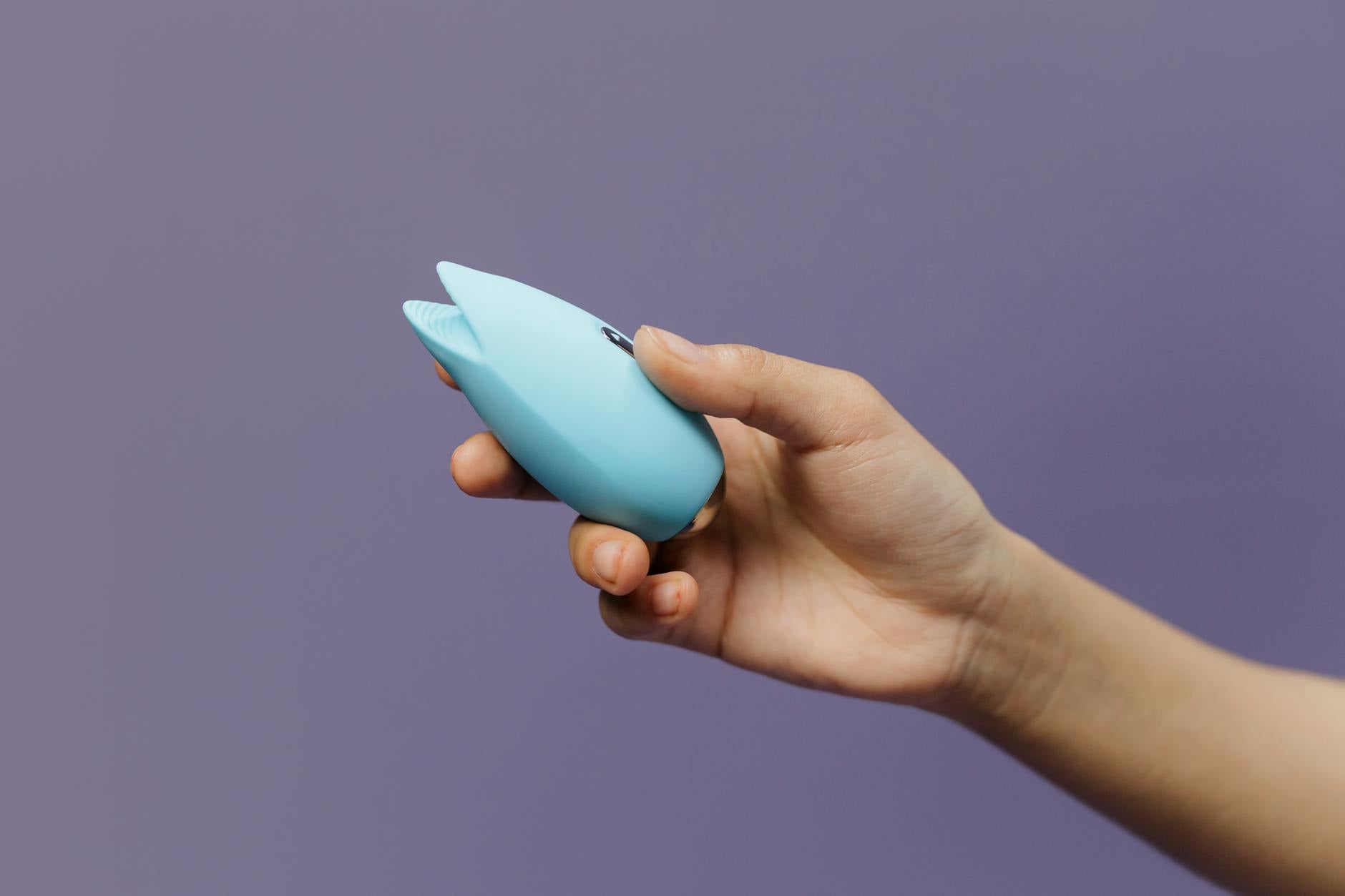
Photo by cottonbro studio on Pexels
Lemon clitoral vibrators work differently. They use suction and gentle pulsing instead of vibration alone. That changes everything. Suction creates a seal and pulls tissue gently into the cup. It stimulates nerves without requiring the surface to be fully engorged. The sensation reaches deeper. It feels more intense even at lower power settings. Your nervous system registers it as novel and meaningful again.
How lemon vibrators rebuild sensation
When your orgasms have lost intensity, what you actually need is not more power. You need a different kind of sensation.
A lemon sucker like Official Nancy Lem's clitoral vibrator uses air-pulse technology. Here's what that does for you:
It works with less tissue engorgement. If your vulva is thinner, less vascular, or less responsive right now, suction creates stimulation that doesn't require maximum blood flow to register. You feel it clearly even when traditional vibrators feel like nothing.
It's genuinely novel. Your nervous system has built up a tolerance to buzz. It hasn't built up a tolerance to suction. That novelty alone reawakens responsiveness. For weeks or months, the sensation will feel sharp and clear again.
It focuses stimulus very specifically. A traditional vibrator spreads vibration over a wider area. Suction concentrates the sensation directly on the clitoris. That specificity means you need less overall stimulation to reach threshold. Less stimulation, sharper sensation, deeper orgasms.
It engages different nerve pathways. Your clitoris has multiple types of nerve endings. Pressure, suction, and temperature all activate different receptors. Lemon vibrators activate pathways that traditional vibrators barely touch. You're not just feeling the same thing in a new way. You're waking up nerve endings that have been dormant.
The adjustment period is real
Here's what I tell clients: the first few times, you might feel the sensation but not orgasm. That's normal. Your nervous system is registering something totally new. It takes a few sessions for your body to learn how to respond.
Start on the lowest setting. Give yourself 15-20 minutes. Don't chase the orgasm. Let your body figure out what this sensation means. Around session three or four, something clicks. The intensity builds faster. The orgasm arrives deeper.
Many people report that their strongest orgasms in years come after a week or two of using a lemon vibrator. Not because the toy is magic. Because you've combined a new stimulus with an expectation reset. Your body isn't bored anymore.
When to check in with yourself about other factors
If your orgasms have weakened but you've also noticed that desire itself is vanishing, or that arousal takes an exhausting amount of time, that's worth discussing with a doctor. Low desire and low sensation sometimes point to the same root: hormonal shift, depression, relationship disconnect, or medication side effects.
A lemon vibrator can absolutely help rebuild sensation. But if desire is the missing piece, a vibrator is a tool, not a fix. You might need to talk to a therapist about what's really going on in your relationship or your head.
If pain accompanies the weaker sensation, definitely see a gynecologist. Genitourinary syndrome from menopause or other tissue changes should be treated directly, not worked around.
Making it part of your routine
Once you find that lemon vibrators work for you, the trick is using them consistently enough to stay responsive without using them so much that they become another source of desensitization.
I usually suggest 2-4 times a week as a sweet spot. That's enough to remind your nervous system what full sensation feels like, without flattening the novelty.
Alternate between using it alone and using it with a partner. Alternate between morning sessions and evening. Change the pattern now and then. Variety keeps your nervous system engaged.
If you start with lemon vibrators when you're nervous about suction toys, that same principle applies. Give yourself permission to explore slowly. The goal isn't an immediate mega-orgasm. It's relearning what your body is capable of.
The emotional piece matters too
Orgasms are physical, yes. But they're also neurological and emotional. If you're feeling disconnected from your body, or if your relationship has been flat, weak orgasms might be your body's honest signal that something upstream needs attention.
That's not a reason to skip the lemon vibrator. It's a reason to use it as part of a bigger conversation with yourself or your partner about what pleasure deserves. When you prioritize sensation again, you're also saying: I matter. My experience matters. My body deserves attention.
Sometimes that reframe alone shifts something. The vibrator just makes it possible to feel the difference.
FAQ: Weak orgasms and lemon vibrators
Why do orgasms feel less intense as you get older?
Multiple factors stack: hormonal changes reduce blood flow to genital tissue, making engorgement less full. Medications for common conditions like blood pressure or depression can dull sensation. Stress and life load reduce your capacity to relax into arousal. And if you've been with the same partner or using the same stimulation for decades, neurological adaptation sets in. Your nervous system stops treating the signal as novel. None of this means you've lost capacity. It means the conditions for intense sensation have shifted.
Can lemon clitoral vibrators work if you've never had strong orgasms?
Absolutely. If your baseline has always been more subtle, a lemon vibrator can still amplify it. Some people's nervous systems are just wired for gentler sensation. That's not a problem. But many people who think they're wired for weak orgasms actually just haven't found the right kind of stimulation yet. Lemon vibrators offer a different pathway. It's worth trying.
How long until you feel a difference with a lem vibrator?
Most people feel the novelty within the first or second use. But the deeper, more intense orgasms typically arrive around session three or four. By week two of regular use, many people report that sensation has become noticeably sharper. Stick with it through that adjustment window. The real payoff is on the other side.
Should you use lube with lemon vibrators?
Yes, especially if your tissue is thinner or less naturally lubricated. A small amount of water-based lube helps the seal work better and makes the whole experience more comfortable. It's not essential on day one, but if you're finding the sensation uncomfortable, lube often fixes it.
Can you use a lemon vibrator if you're on medication that affects sensation?
Yes. In fact, lemon vibrators are often more helpful in this scenario than traditional vibrators because the suction mechanism doesn't rely on your tissue being fully engorged or hyper-responsive. Many people on antidepressants or birth control find that lemon vibrators are the first tool that actually works for them. You might need to experiment with intensity levels, but it's worth trying.
What if a lemon vibrator doesn't help?
If you've used one consistently for a few weeks and sensation still isn't coming back, that's worth investigating with a doctor. Weak sensation can sometimes point to nerve issues, hormonal imbalance, or medication side effects that need direct attention. A vibrator is a tool, not a diagnosis. If it's not working, the underlying cause might need different support.
The bottom line
Weak orgasms aren't a life sentence. They're usually a sign that something in your environment or your body has shifted. A lemon clitoral vibrator can't fix all of those things. But it can offer a new pathway of sensation that wakes your nervous system back up. Combined with consistency, patience, and real attention to your own pleasure, that's often enough to bring intensity roaring back.
Your body still knows how. It just needs the right signal to remember.
References and sources
Albertsen, P.C., Hansson, H.A., & Zeterström, B. (1995). The morphology and vascular supply of the human clitoris. Journal of Urology, 153(3 Pt 1), 533-540.
Cipres, D. (2019). Female sexual dysfunction in the older woman. Current Sexual Health Reports, 11(2), 6-11.
Goldstein, A.T., Pukall, C.F., & Goldstein, S.W. (2009). When sex hurts: A woman's guide to understanding and overcoming sexual pain. Da Capo Press.
Levin, R.J. (2011). The clitoris: An appraisal of its reproductive functions over the life course. Reproductive Sciences, 18(12), 1135-1146.