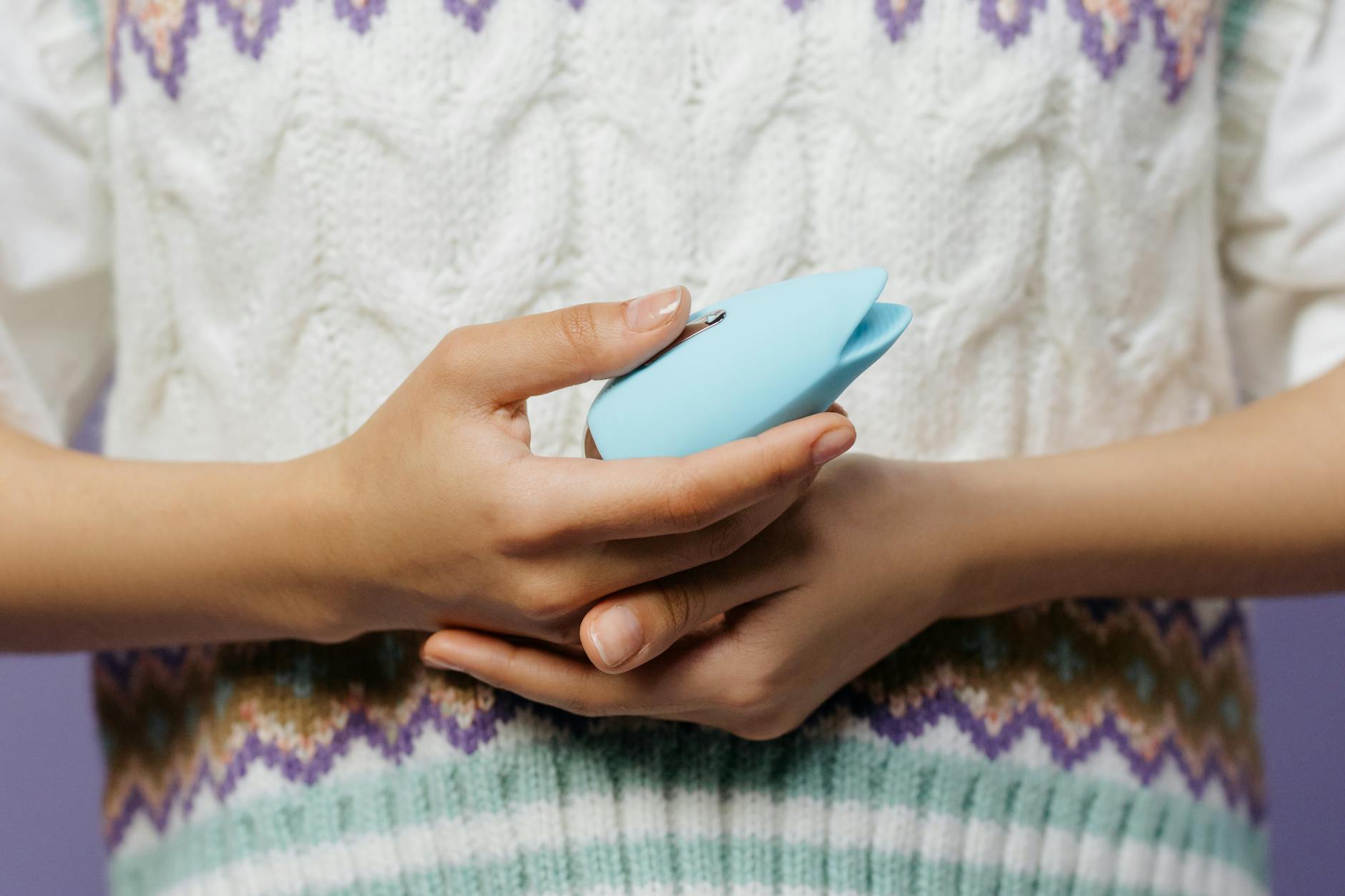
Let's be real about nerve damage and sensation
Nerve damage changes how your body registers touch. It doesn't erase sensation entirely, but it shifts the threshold. What felt obvious before now requires a different kind of signal to get through. The good news: your clitoris has dense nerve clustering, and air-pulse technology works with that architecture in a way that manual or traditional vibration often doesn't.
If you've experienced nerve damage from surgery, injury, chemotherapy, or diabetes, you know the frustration. Standard vibrators feel like nothing. Your partner's touch feels muted. The nervous system is playing by new rules, and nobody gave you the instruction manual.
How nerve damage changes sensation in the first place
Your clitoris has roughly 8,000 nerve endings concentrated in a small area. When those nerves are damaged, the signal between touch and brain gets interrupted. It's not that the nerves are dead, it's that the message takes a different route or arrives in a lower volume.
This happens in a few specific ways. Peripheral neuropathy from diabetes damages the small nerve fibers that register light touch and temperature. Surgical nerve injury from gynecological procedures can scar nerve tissue or create gaps in the neural pathway. Chemotherapy neurotoxicity affects how nerves transmit sensation. In all cases, you're not broken. Your nervous system has just become harder to reach.
Here's what doesn't change: the clitoris still has blood vessels, still responds to pressure variation, and still wants stimulation. You haven't lost the capacity for pleasure. You've just lost one of the common routes to get there.
Why traditional vibrators often don't work for nerve-damaged tissue
Most vibrators deliver steady, repetitive oscillation. That works great when your nerves are firing normally. But with nerve damage, that kind of constant micro-vibration can feel like nothing at all. The signal is too faint for a damaged nervous system to pick up. You end up chasing sensation that never quite arrives.
This is deeply frustrating and also completely normal. It's not a reflection on your body, your desire, or your ability to experience pleasure. It's just that the tool doesn't match the job.
Clitoral suction devices like the lemon vibrator work differently. Instead of micro-vibrations, they use rapid air-pulse waves that create a seal around the clitoral tissue. This generates a broader, more dynamic wave of pressure variation rather than a tight, repetitive buzz.
That pressure change is something your damaged nerves can actually detect. It's not subtle. It's not asking your nervous system to hear a whisper when it's only picking up shouts now.
Why air-pulse technology works better for low sensation
Think of it this way: traditional vibration is like tapping on a door. Air-pulse suction is like waves hitting a beach. One is a point of contact. The other is a field effect.
When you use a lemon clitoral vibrator, the suction creates a gentle seal and then releases and reseals in rapid rhythm. That changing pressure travels across the entire clitoral area, not just one spot. Your nerve endings, even if they're damaged, can detect that larger wave pattern more easily than they can detect a tiny back-and-forth buzz.
The suction also engages the tissue itself, drawing blood into the area and increasing sensitivity gradually over repeated sessions. This is particularly helpful for nerve-damaged tissue because it works with the nervous system's new operating parameters rather than fighting it.
Many people report that their first experience with a lemon suction vibrator feels dramatically different. Suddenly, there's sensation where there wasn't any before. It's not because your nerves healed overnight. It's because the stimulation is finally in a format your nervous system can process.
The adjustment period and what to expect
When you have nerve damage, the path to pleasure isn't straight. Your body needs time to learn that this new input is both safe and worth responding to. This is why patience matters in a way it might not have before.
Start with the lowest setting. I mean genuinely lowest. Your nervous system needs to build a new relationship with sensation, and low intensity is where that conversation begins. Spend 2-3 sessions at setting 1 or 2 before increasing. You're not in a rush. You're building a new neural pathway.
Warm up longer than you think necessary. Increased blood flow to the area makes damaged nerves more responsive. A 20-minute warm-up with a partner or on your own, focusing on mental relaxation and non-goal-oriented touch, primes the nervous system.
Use water-based lubricant. Nerve-damaged tissue is often more sensitive to friction, even when it's less sensitive to pressure. Lube protects the tissue and makes the seal from a lemon vibrator more comfortable.
If you experience any sharp pain, stop immediately. Aching or tingling is often normal as your nervous system wakes up. Sharp pain is your body saying something is wrong. There's a difference, and your job is to know which you're feeling.
What partners need to know
If you're exploring this with someone else, the emotional piece is as important as the physical one. Nerve damage often arrives with shame or grief about what pleasure used to feel like. Your partner needs to understand that this is a process, not a failure.
The best partners in this situation are the ones who can hold space for experimentation without making it about performance or outcomes. You're not trying to recreate the old sensation. You're discovering what new sensation is possible.
Many couples find that the introduction of a lemon clitoral vibrator actually deepens their intimacy during this transition because it moves the focus from "does this feel good" to "let's explore what does feel good now." That's a fundamentally different conversation, and it's often a better one.
When to adjust your expectations and celebrate small wins
Nerve recovery is nonlinear. Some days your sensation is better than others. Hormonal shifts, stress, sleep, and even weather can affect how well your nerves are firing on any given day. This isn't failure. This is the reality of a nervous system that's been through trauma.
Celebrate the wins you actually get. If you had a session where you felt 30 percent of what you used to feel, that's not a disappointing 30 percent. That's pleasure you couldn't access yesterday. That's your nervous system learning.
Over weeks and months, many people report that their baseline sensation improves. Not back to exactly what it was before, but to a new normal that's genuinely pleasurable. The nervous system has neuroplasticity. It can rebuild pathways. It takes time, but it's possible.
When to see a specialist
If your nerve damage is recent (within the past year), a pelvic physical therapist trained in neuropathy can help. They can assess which nerve fibers are still intact and suggest approaches tailored to your specific situation. This isn't essential, but it can accelerate your adjustment.
If you're on medications that affect sensation (certain pain management drugs, some antidepressants), a conversation with your prescribing doctor about timing or alternatives might help. You don't need to choose between managing pain and having pleasure, but you should know if your medication is a factor.
If sensation doesn't improve over 3-4 months of consistent exploration, that's worth mentioning to your doctor too. Sometimes nerve-damaged tissue needs different support.
The long view
Nerve damage is one of the harder challenges to navigate in terms of pleasure. It's not about aging or hormones or relationship shifts. It's about your nervous system being physically interrupted. That's real and hard.
But it's also not the end of sensation or pleasure. It's a pivot. A lemon clitoral vibrator is a tool that works with your new nervous system rather than fighting it. Your body still wants stimulation. Your brain still craves pleasure. You're just meeting them where they are now, not where they were.
People also ask
How long does it take to feel sensation again after nerve damage?
There's no universal timeline. Nerve healing and neuroplasticity work on their own schedule. Some people notice improvement within weeks of starting with air-pulse clitoral vibrators. Others take 2-3 months to feel consistent sensation. Consistency matters more than speed. Regular, patient exploration works better than sporadic intensive sessions. If you're not noticing any change after 3 months of 2-3 times weekly exploration, it's worth checking in with a healthcare provider to rule out other factors.
Can a lemon vibrator actually help rebuild nerve sensation?
Not directly. The vibrator doesn't heal nerves. But it does work with your current nervous system capacity to create sensation that you can feel now. Regular use also increases blood flow to the area, which supports nerve health generally. Over time, some people find their baseline sensation improves alongside using air-pulse toys. This seems to be related to the nervous system becoming more responsive, not the nerves physically repairing. Think of it as nervous system retraining rather than healing.
What if air-pulse vibrators also feel like nothing?
Then your nerve damage is likely more severe, and professional support becomes more valuable. A pelvic physical therapist or neurologist can help assess what kind of stimulation might work. In some cases, different types of sensation (temperature, very light touch, intense pressure) land differently than vibration does. There's often a pathway to pleasure even with significant nerve damage, but finding it requires personalized assessment. A lemon clitoral vibrator is a good first tool, but it's not the only tool.
Can I use a lemon vibrator with numbness from chemotherapy specifically?
Yes, and many cancer survivors do. Chemotherapy neuropathy typically affects fine sensation but often leaves deeper pressure sensation intact. Air-pulse clitoral vibrators work well for this specific type of nerve damage because they deliver broader pressure waves rather than fine point-contact vibration. Start low and slow, same as with other nerve damage. Your oncology team can also flag if there are any specific concerns about local blood flow or tissue sensitivity in your case.
Is it normal to feel tingling or slight discomfort when first using clitoral vibrators after nerve damage?
Tingling is often normal as your nervous system wakes up to new input. It can feel strange or uncomfortable initially because you're not used to that particular pattern of sensation. Aching is often normal too. Sharp pain is not. If you're experiencing tingling or mild aching, that usually settles within a few sessions as your body acclimates. If the discomfort increases or becomes sharp, stop and give your tissue a break.
Does nerve damage mean I should never expect orgasm again?
No. Orgasm is possible even with significant nerve damage, though it may look different or take different approaches to reach. Many people with neuropathy do experience orgasm, sometimes more intense or unexpected than they anticipated. The path to orgasm changes, but the capacity doesn't disappear. Patience and exploration with the right tools, like lemon clitoral vibrators, often makes orgasm possible again.