
Here's the thing about hesitation
Your partner mentioned toys. Maybe they sent you a link. Maybe they brought it up during sex, or after, or completely out of the blue. And your first response was probably not "yes, let's do that immediately." That's not a sign you're wrong for the relationship. It's actually the most common starting point for couples exploring this together.
Hesitation around introducing toys usually comes from one of three places: wondering if it means your partner isn't satisfied, worrying that you'll feel replaced or less-than, or just not knowing what it actually feels like and feeling nervous about the unknown. All three are legitimate. But here's what I've seen happen repeatedly with couples who actually try a lemon clitoral vibrator together: the hesitation shifts once they understand what the toy actually does, and doesn't do.
What lemon vibrators actually change
Let's get specific about the mechanics first. A lemon vibrator uses suction and gentle pulsing to stimulate the clitoris differently than fingers, tongues, or traditional vibrators. It doesn't replace stimulation. It intensifies certain sensations and makes others easier to access.
When a partner introduces this into partnered sex, three things typically happen:
First, the physical sensation changes. Suction feels distinctly different from other kinds of touch. Some people experience stronger or more targeted arousal. Others find it easier to orgasm because the stimulation is steadier than a hand can be. This is not a reflection on what your partner was doing before. Different doesn't mean better. It means different.
Second, the mental space shifts. If you've been focusing on whether your partner is enjoying themselves, a lemon vibrator can actually free up cognitive space. You're not wondering if your rhythm is right or if they're close. You can relax into the experience because the toy is doing its job.
Third, the dynamic changes in ways that often feel good. Many couples find that introducing a toy creates a moment of genuine collaboration. You're trying something new together. You're checking in. You're paying attention to each other in a slightly different way.
None of that is about your partner being unsatisfied with you. It's about pleasure being a shared project.

Photo by cottonbro studio on Pexels
Why your hesitation might actually mean you're ready
I see a lot of couples where one person is enthusiastic about toys and the other is unsure. Often, the hesitant partner is actually the better candidate for starting. Here's why.
When someone's been wanting toys for months and finally gets to use one, sometimes the experience is so anticipated that it becomes a big deal. Pressure builds. Expectations shift. The hesitant partner, on the other hand, often has lower stakes. You're approaching this from curiosity rather than hope. That actually creates space for the experience to just be what it is, rather than what it "should" be.
Your hesitation also means you're likely to communicate more clearly. You're probably going to say "actually, that's too intense" or "let's wait a second" because you're not as invested in making it work. That honesty is what makes partnered toy use actually deepen connection instead of creating awkwardness.
How to start without it feeling weird
If you're going to try this with your partner, three things matter.
First, frame it as exploration, not a fix. The conversation should be "I'm curious about this" not "you said I needed this." If your partner was the one who suggested it, reframe it in your own terms. "I was thinking about what you mentioned. Want to try it together?" That small shift makes it collaborative.
Second, practice alone first if you want to. You don't have to. Some people prefer their first experience to be partnered because it feels less clinical. But if you're nervous, spending 15 minutes with a lemon vibrator on your own first removes a layer of pressure. You'll know what the sensation feels like. You'll know what settings you prefer. That knowledge makes the partnered experience less uncertain.
Third, set a very low bar for success. "Success" does not mean you have an amazing orgasm or that everything feels incredible. Success means you tried it, you communicated about it, and you didn't hate it. That's it. If you use a lemon vibrator with your partner once and feel neutral about it, that's a win. You showed up. You were willing. That's the whole point.
The specific conversation to have first
Before you touch anything, talk. I know that sounds obvious, but most people skip this and then feel awkward mid-experience.
Ask your partner what they're hoping for. Not in a defensive way. Genuinely curious. "What made you think about this?" and "What do you imagine happening?" are better questions than "Why don't you like what we're doing now?" You might learn that they've been curious about their own sensation, not judging yours. Or that they saw something that intrigued them. Or that a friend mentioned it. The reason matters because it frames the rest of the conversation.
Then tell your partner what you're nervous about. "I'm worried you'll prefer this to me," is important information. So is "I'm just not sure if I'll like it." Your partner probably wants to know what you're feeling. Keeping it hidden usually makes things weirder.
Finally, agree on basic logistics. When do you want to try this? Do you want it to be the whole focus of sex, or just part of it? Do you want to incorporate it when you're already aroused, or at the beginning? These logistics sound boring, but they actually make the experience feel less chaotic.
What typically happens the first time
Most people feel a little self-conscious. The toy makes a sound. You might not know where to look or what to do with your hands. Your partner might feel unsure about the rhythm or pressure. All of that is completely normal and usually lasts about 90 seconds before the novelty wears off.
If you orgasm, great. If you don't, also fine. If it feels weird or too intense, you can stop. There's no rule that says you have to love it the first time. Many people need two or three experiences to actually feel comfortable enough to enjoy it.
What often shifts is the mental component. Watching your partner's response, or feeling their attention on you while the toy is doing its work, creates a different kind of intimacy. Not better than what you had before. Different. And for most couples, different-and-shared beats predictable-and-solo.
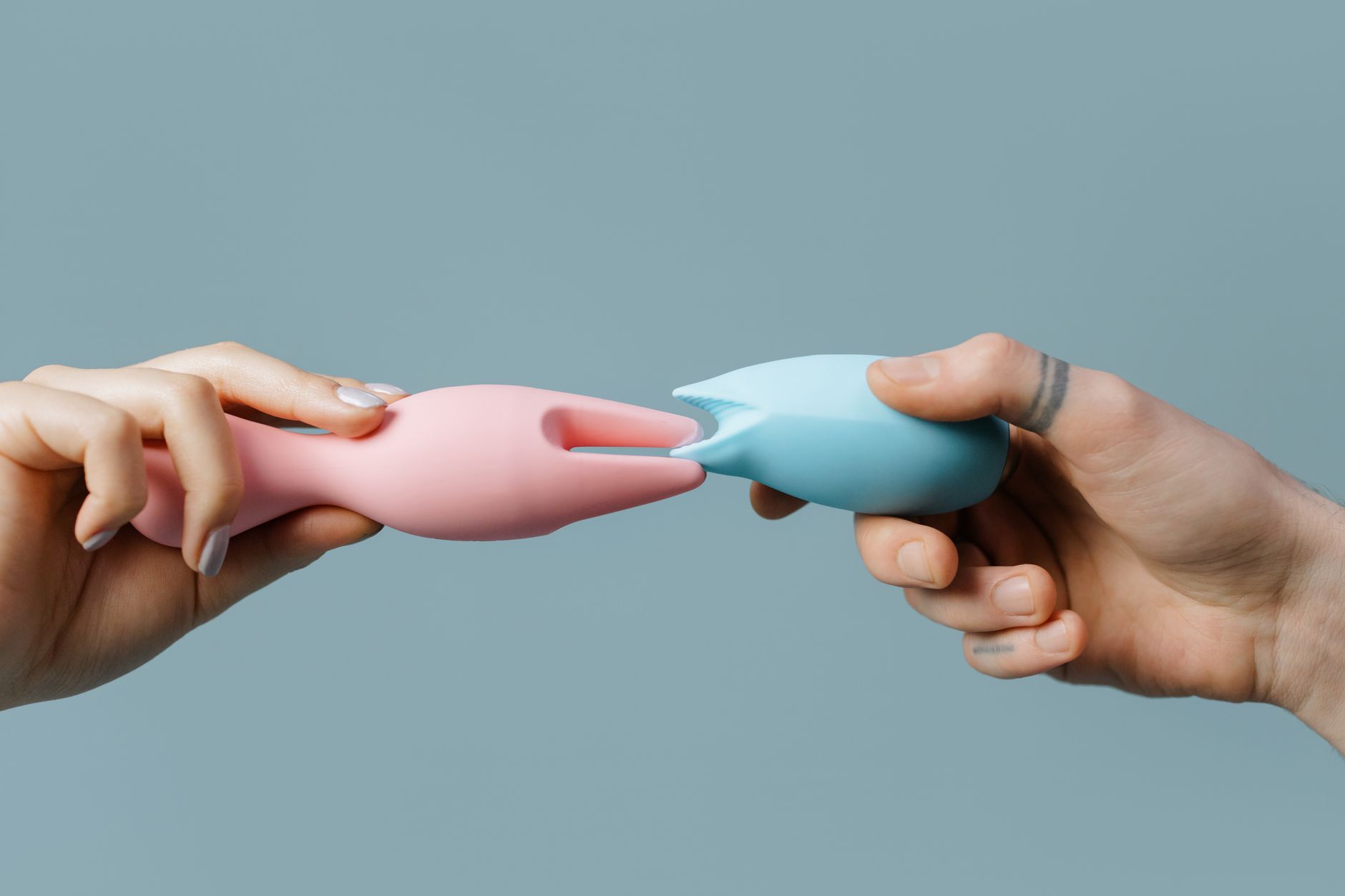
Photo by cottonbro studio on Pexels
Why lemon vibrators specifically make this easier
If you're going to try something, the design matters. A lemon clitoral vibrator is designed to be comfortable, intuitive, and not intimidating. The suction mechanism feels novel without feeling clinical. It's genuinely quieter than most vibrators. And because suction works differently than traditional vibration, it often appeals to people who've been hesitant about toys in the past.
Many of my clients who started with a lemon vibrator said that the experience felt less like "using a sex toy" and more like "a different kind of touch." That distinction actually matters psychologically. It's easier to relax into something that feels like an evolution of partnered sex than something that feels foreign or mechanical.
After the first time
Don't expect instant clarity. You might feel great about it and want to do it again. You might feel neutral and want to wait. You might feel uncomfortable and need to process. All of those responses are okay.
If you want to do it again, cool. If you want to try a different approach or a different toy, also cool. If you want to take a break and think about it, that's fine too. The point is that you and your partner are now in conversation about pleasure together, and that conversation is way more valuable than any single experience.
Many couples find that once they've crossed this line once, future conversations about pleasure get easier. You've already been vulnerable. You've already taken a risk together. The next experiment, whatever it is, feels less high-stakes.
What this actually means for your relationship
Introducing toys with a partner isn't about fixing something broken. It's about staying curious about each other. It's about saying "I want to know what else we can discover together." That willingness, even if it comes slowly or hesitantly, is what deepens long-term connection.
You don't have to be thrilled about toys to be a good partner. You just have to be willing to try. And if you're reading this, you probably are.
People also ask
Does using a toy mean my partner isn't satisfied with me?
No. Wanting to explore a lemon vibrator or any toy is about expanding pleasure, not replacing it. A partner can be completely satisfied with you sexually and still be curious about a new sensation. Think of it like food. You can love your partner's cooking and still want to try a new restaurant. The desire for novelty doesn't mean criticism of what came before.
What if I try it and hate it?
Then you tell your partner, and you don't do it again. But you'll have shown up and been willing, which actually matters more than whether you loved the experience. Many people need two or three times before comfort builds. If you genuinely dislike it after a few tries, that's valid information. Your partner learns something about you. The conversation shifts to other options or back to what you already enjoy.
Will my partner want to use toys all the time if we start?
Maybe. Some people discover they love lemon vibrators and want to incorporate them regularly. Others try it a few times and then forget about it. Most fall somewhere in the middle. Whatever your partner's preference is, you get to have your own. You're allowed to want toys once a month or never. The goal is to figure out what works for both of you, which requires ongoing communication.
What if I'm worried the toy will be better than me?
It won't. A lemon vibrator can't replicate partnership, attention, chemistry, or the feeling of being wanted. What it can do is create a specific sensation that feels good. Those are different things. You're not in competition with an object. You're both exploring pleasure together, which is actually an intimacy tool, not a threat.
How do I know if I'll like suction toys specifically?
The honest answer: you don't until you try. But if you're nervous about intensity, suction vibrators are often gentler than traditional ones because they work through a different mechanism. If you're worried about feeling numb or disconnected, suction often creates a more localized sensation that helps with that. Talk to your partner about what you're hoping for, and consider how lemon vibrators help rebuild pleasure when desire and arousal feel mismatched if you're worried about sensation.
What if we try it and it kills the mood?
First time awkwardness is real. Someone fumbles with the settings. The timing feels off. You start laughing instead of staying aroused. All very possible. That's not failure. That's learning. Second attempts are almost always less clumsy. If you want to make the mood easier to maintain, agree to try it when you're already aroused and relaxed, not when you're rushing or tired. And honestly, laughter during sex isn't a bad thing. It's actually a sign you're comfortable enough together to be human.
Can I use this as a tool if I'm on medication that affects sensation?
Many people taking medications that reduce clitoral sensation find suction toys genuinely helpful. The mechanism works differently than other stimulation, so it can access sensation other tools can't. But this is worth discussing with your partner before you start. If medication is affecting your pleasure, there's also value in exploring how to use lemon clitoral vibrators when medication affects sensation to understand what to expect.