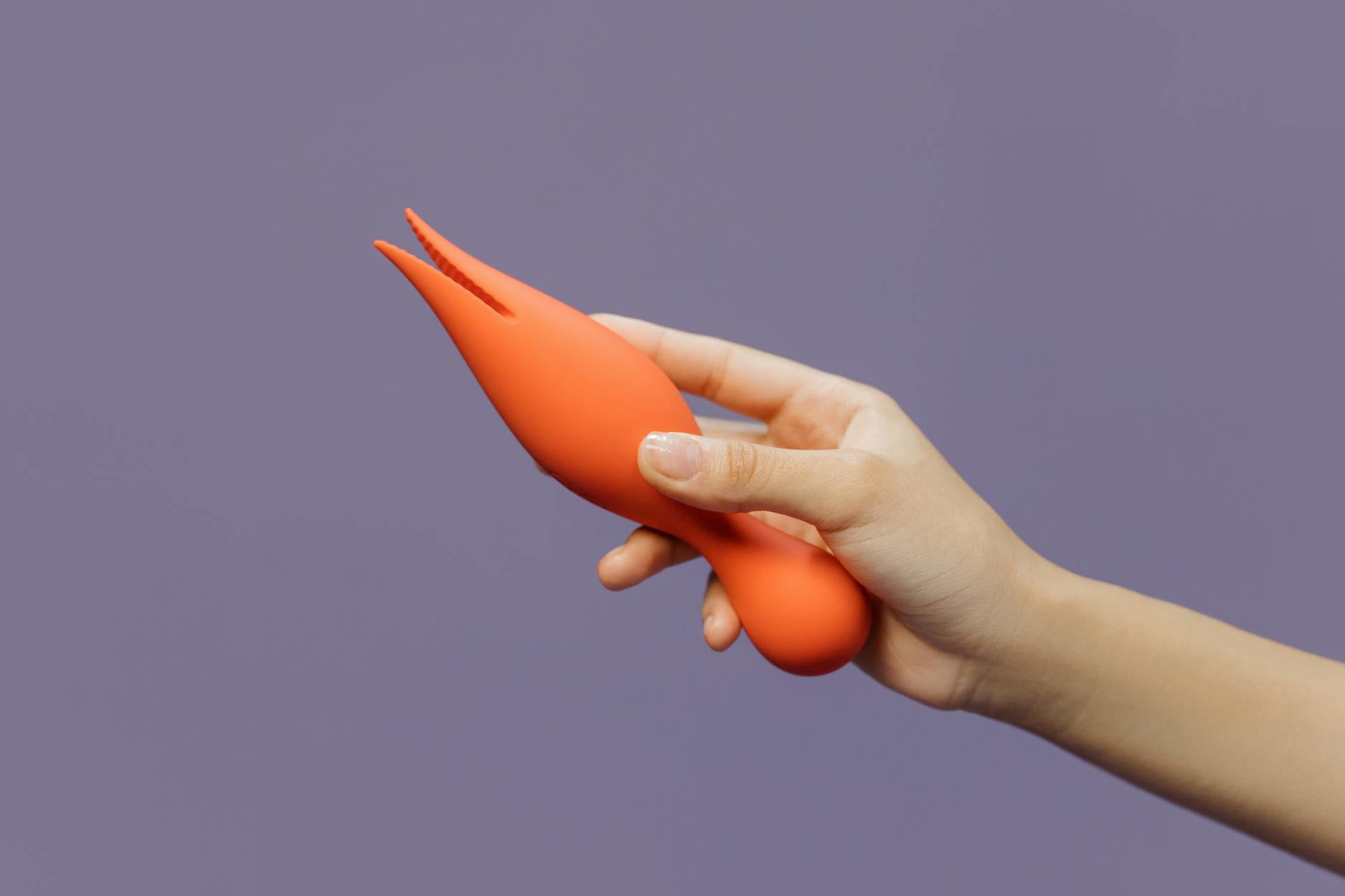
How Lemon Vibrators Work with Partners After Long-Term Relationships
When desire has quieted over the years, lemon suction vibrators can reignite connection. Here's how couples use them together and what changes when you introduce one after years of routine.
Honestly, most long-term couples don't talk about the quiet erosion of sexual tension. Desire doesn't vanish in a fight. It fades. Over 10, 15, 20 years of the same rhythm, the same patterns, the same positions, your nervous system stops registering novelty. And when your body stops registering novelty, it stops responding with the urgency it once did.
That's not a relationship failure. That's neurobiology.
But here's what couples often don't realize: you can rebuild that response. It requires introducing something genuinely new. And lemon clitoral vibrators, specifically lemon suction vibrators, work unusually well for partners reconnecting after the pleasure gap has widened.
I've watched hundreds of couples in my practice experience a tangible shift the moment they introduce a lemon vibrator together. Not because the toy itself is magic. Because it forces you to have the conversation you've been avoiding, and then it delivers a sensation neither of you has experienced in years.
Three things happen in long-term relationships that directly impact arousal.
First, familiarity desensitizes you. Your partner's touch is known territory. Your brain stops paying attention. The same caress that once lit you up now feels like a signal that you're heading toward the expected sequence.
Second, roles calcify. One of you became the initiator. One became the receiver. One became the one who knows what to do. Over time, these roles feel locked in. Suggesting something new feels risky. What if they feel rejected? What if you feel inadequate for suggesting it needed changing? So you don't.
Third, time compression erodes playfulness. With kids, work, aging parents, bills, the mental load, sex becomes another task. It's not scheduled resentfully, but it moves into the category of things that should happen rather than things you're genuinely excited about.
None of this means your partner doesn't attract you. None of it means the relationship is broken. It means your nervous system needs a reset.
A lemon vibrator introduces sensation that's literally foreign. Your partner can't replicate suction stimulation with their body. That foreignness is the point.
When your brain encounters a sensation it hasn't experienced in years, it pays attention. Your nervous system moves out of autopilot. For the first time in a while, your arousal isn't predictable. You don't know exactly what comes next. That uncertainty is where authentic desire lives.
Second, lemon clitoral vibrators work through a different pleasure pathway than penetration or manual stimulation. Suction activates nerves in a gentler, broader way. Your arousal builds differently. It climaxes differently. For many people who've only experienced one type of stimulation in a relationship, this is genuinely new.
Third, using a lemon vibrator together forces collaboration in the moment. You both have to think about what you're doing. You can't run on autopilot. One partner controls the vibrator, and that person has to stay present to their partner's responses. The other partner has to communicate what feels good. You're in dialogue, not routine.
Introducing a lemon vibrator isn't a technical problem. It's a relational one. You need to separate the introduction of the toy from any implicit criticism of what came before.
The framing matters enormously. Not: "I need this because you're not doing it right." But: "I want to try something that's completely new for both of us. I want to feel what that's like with you."
Not: "Sex has been boring." But: "I miss feeling excited and surprised with you. I think there's something here that could help us get there."
This conversation works best when it happens outside the bedroom. Over coffee. During a walk. Somewhere neutral. You're not asking for sex. You're sharing an idea and inviting them into it.
Some partners will be enthusiastic. Others will feel a flash of something that looks like inadequacy. That reaction is normal. It usually dissolves in about 90 seconds, but it needs to be named. "I know this might feel like I'm saying something's wrong. I'm not. I just want to explore together."
Start with the simpler patterns. The lemon vibrator has multiple intensity levels and patterns. Many long-term couples assume they should jump to full intensity. You don't.
When your partner is using a lemon vibrator on you, start at pattern one or two. This does three things. It lets you feel the sensation without overwhelming your nervous system. It lets your partner learn your responses at a speed they can read. And it creates this extended period of building arousal, which most long-term couples have forgotten feels like.
The receiving partner should talk. Not dirty talk, necessarily. Just honest response. "That feels good." "Try this angle." "Slower." This communication is its own kind of intimacy. Most long-term couples have stopped communicating during sex. It returns you to a state of paying attention.
After a few sessions, you can experiment with higher patterns. But there's no rush. The goal isn't the most intense orgasm. The goal is reclaiming the experience of exploration together.
Many couples also find that adding lemon suction vibrators to partnered sex, rather than replacing penetration, works better. Some use it during foreplay. Others during the main event. There's no blueprint. The point is that you're deciding together, in the moment, rather than following the script you've been running for years.
When you're using a lemon vibrator alone, your entire nervous system is focused on your own sensation. That's valuable. But when a partner is the one operating the vibrator, something shifts.
You're not in control. That's either vulnerable or thrilling, depending on your relationship and your psychology. For many people, relinquishing control in a long-term relationship where they've always had to be strong or functional is actually profoundly erotic.
You also get feedback from your partner's attention. You can feel them watching you, paying attention to your reactions, adjusting based on what they're observing. That gaze, that attunement, is deeply connecting. Most long-term couples have stopped looking at each other during sex. Reintroducing that eye contact, that presence, fundamentally changes the experience.
Sometimes one partner gets into it immediately. The other partner feels skeptical, awkward, or even resentful.
Resistance usually isn't about the vibrator. It's about feeling like the relationship needed fixing without being asked, or feeling like they weren't enough, or (honestly) sometimes it's about embarrassment or unfamiliarity with talking about pleasure.
If you hit resistance, don't push. Suggest trying it once with no expectations. Not for the purpose of having sex, but to experience it. Make it low stakes. If it doesn't land, you can try again in three months. You're not trying to convince them. You're inviting them.
Sometimes one partner wants to use a lemon vibrator on themselves while the other watches. That's a legitimate entry point too. It removes the pressure to perform and lets your partner see what you respond to.
Here's what I see in my practice after couples introduce lemon vibrators: sex becomes something they think about again. Not obsessively. But it moves back into the category of something they're curious about, rather than something they should probably do.
That curiosity spreads. Couples start talking more about pleasure. They start trying different positions, different times of day, different contexts. The vibrator doesn't fix the relationship. But it cracks the seal on a conversation that had been locked shut.
For many long-term couples, that conversation is the actual healing. The lemon vibrator is just the catalyst.
Yes. Actually, the longer the gap, the more useful starting with a lemon vibrator can be. It removes some of the performance pressure that comes with sex after a long absence. You're not trying to recreate your sexual history. You're experiencing something genuinely new together. That's much lower stakes emotionally.
Possibly, in the first moment. That flash of "am I not enough" is real and common. But it usually dissolves fast, especially if you frame it as exploring together rather than fixing something. If your partner's feelings stay stuck in inadequacy after a few weeks, that's worth talking to a therapist about. It might point to deeper insecurities that predate the vibrator.
Lemon suction vibrators are waterproof silicone or similar. Wash it with warm soapy water between uses, or use a toy cleaner. If you're moving between partnered and solo use, you can use a condom over the vibrator as a barrier, though many couples skip this. The key is that you both feel comfortable and safe.
That's fine. You can use it solo while your partner is present, or your partner can use it on you. Not every tool needs to be about mutual pleasure. Sometimes introducing something new just for your pleasure is enough to shift the dynamic.
No. It means you want more. Wanting more pleasure, more exploration, more connection isn't a statement about your partner's inadequacy. It's a statement about your own aliveness. The couples I work with who bring toys into their sex life are usually doing it because they value each other enough to keep trying.
There's no prescription. Some couples use it weekly. Others monthly. What matters is that it stays novel and exciting, not routine. If it becomes "Wednesday night with the vibrator," you've just moved your script one square over. The goal is to rebuild playfulness and spontaneity. Once you've done that, the vibrator becomes optional, not essential.
After 10 or 20 or 30 years together, pleasure doesn't just happen. It requires intention. It requires you both to stay curious about each other. A lemon vibrator is a tool, not a relationship fix. But it's a tool that works because it forces the conversation, rebuilds novelty, and creates a space where you can both feel seen and excited again.
Your long-term relationship doesn't need saving. It needs reigniting. And sometimes that starts with being willing to try something neither of you has experienced before. Together.