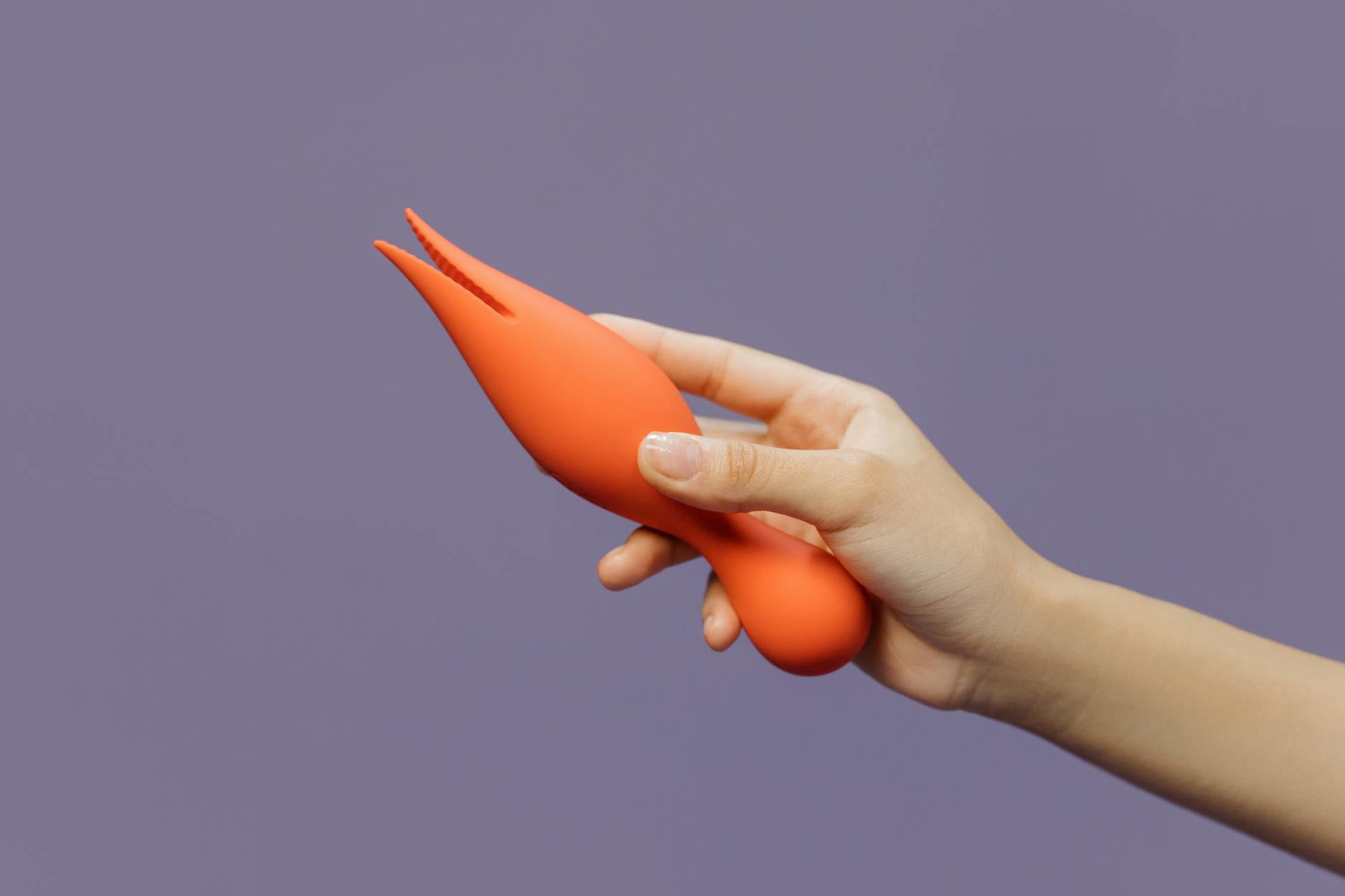
Let's be real about what happens to your clitoris
Reduced clitoral sensitivity is weirdly common and almost never discussed. Your clitoris can feel less responsive due to hormonal shifts, medication side effects, stress, or just the wear and tear of life. It's not broken. It's not gone. It's just operating at a different threshold right now. And a lemon vibrator is actually one of the smartest tools for working with this shift, not against it.
The reason is simple. Suction-based clitoral vibrators like the Lemon work differently than traditional vibrators. They don't rely on direct friction or aggressive oscillation. They use rhythmic air pulses to stimulate the entire nerve network of your clitoris. When you're dealing with reduced sensation, that approach has real advantages.
Why your clitoris might feel less responsive
Three big culprits show up again and again in clinical practice:
Hormonal changes. Dropping estrogen and testosterone both reduce clitoral blood flow and tissue sensitivity. Menopause, perimenopause, hormonal birth control, and postpartum shifts all land here. Your clitoris isn't smaller or damaged. Blood is just reaching it less efficiently.
Medication effects. Antidepressants, anti-anxiety meds, beta-blockers, and some blood pressure medications all can numb sensation. This is a side effect that gets almost zero discussion in most prescribing conversations, which is wild because it affects real people's lives.
Neural fatigue. Years of using the same type of stimulation, same rhythm, same pressure. Your nerve endings adapt. They need novelty or a different kind of signal to wake up again.
Stress, poor sleep, and feeling emotionally disconnected from your partner also tank sensation temporarily. The good news: temporary is the operative word.
Why lemon vibrators work differently with low sensitivity
A traditional vibrator sends a high-frequency oscillating signal straight into tissue. If your clitoris is already desensitized, that can feel like background noise. You're waiting for something to happen, but nothing lands.
A lemon sucker uses air pulse technology. It creates a seal around your clitoral area and releases rhythmic waves of pressure and release. This achieves two things simultaneously: it increases blood flow to the tissue (which wakes up sensation over time) and it stimulates a much wider area of nerve endings at once, so you feel more, faster.
For reduced sensitivity specifically, this matters. You're not asking your clitoris to respond to a narrow frequency of vibration. You're delivering a complex, full-spectrum stimulus that hits multiple nerve pathways. Many people find they can feel sensation with a lemon vibrator when traditional vibrators feel like nothing at all.
The exact approach that works
Three non-negotiable steps before you begin:
Step 1: Start with the lowest pattern first. Do not skip this. Use pattern 1 or 2 for a full week before moving anywhere else. Your goal right now is not orgasm. It's rebuilding the conversation between your brain and your clitoris. The lowest pattern allows nerve endings to wake up without overwhelming them. This is the opposite of what you might expect, but it works.
Step 2: Extend your warm-up time to 20-30 minutes. Reduced sensitivity means slower blood flow. You need time for engorgement to happen naturally before you introduce any toy. Use your hands. Use your partner's hands or mouth. Build arousal the slow way. Then introduce the lemon vibrator when you're already halfway to climax.
Step 3: Focus on the pattern, not the intensity. Most people with reduced sensitivity assume they need to turn the strength way up. Backwards. What actually works is finding the right pattern. The Lemon has multiple rhythms. Some feel like taps. Others feel like waves. Others feel like rolling pressure. Experiment with patterns 1-7 at low strength before touching the intensity dial.
The patterns that wake sensation back up
If I had to pick three patterns that consistently help people with reduced clitoral sensitivity, these are them:
Pattern 2 (slow pulse). This mimics the natural rhythm of arousal building. It's gentle, sustained, and creates a sense of momentum. Many clients say it feels like something is actually happening, whereas pattern 1 sometimes feels too simplistic.
Pattern 5 (rolling wave). This distributes stimulus across time and space rather than hammering one frequency. Your clitoris gets a complex signal instead of a monotone one. Variety wakes up tired nerve endings.
Pattern 7 (escalating intensity). If you're deep into a session and still not feeling much, this pattern builds gradually. It gives your nerves time to adapt and fire in sequence rather than all at once. Start this pattern at strength 2, not strength 1.
Budget 15-20 minutes with one pattern before switching. Your nervous system needs time to learn the signal. Three minutes is not enough.
When to add lube, and what kind
Reduced sensitivity often comes with reduced lubrication, especially if hormones are involved. Do not skip lube assuming you need to "tough it out." This is not about shame. It's about neurology.
Water-based lube reduces friction between the lemon vibrator and your skin, which means the suction seal works better and the air pulses transmit more efficiently. Use a generous amount. Reapply every 10-15 minutes. It feels luxurious and it genuinely helps the device work harder for you.
Silicone-based lubes feel richer and last longer, but they damage silicone toys over time. Stick with water-based for the Lemon.
The patience part nobody wants to hear
If your reduced sensitivity is from hormonal changes, medication, or long-term stress, rebuilding takes weeks, not days. Think of it like retraining a muscle. You wouldn't expect full strength back from one workout. The same applies here.
Many of my clients report that sensation starts improving noticeably after 2-3 weeks of consistent use with this approach. After 6 weeks, most people are back to baseline or even more responsive than before. That's not magic. That's neurovascular adaptation.
While you're rebuilding, track what works. Which patterns feel best? What time of day is sensation sharpest? Does partnered touch beforehand make a difference? This data matters because it helps you understand what's happening in your body, which is honestly half the battle.
When to talk to a doctor
If your reduced sensitivity showed up suddenly alongside other symptoms (pain, vaginal dryness, mood changes, sleep issues), mention it to your GP or gynecologist. Often there's a treatable underlying cause: thyroid issues, hormonal shifts, medication changes. Get the full picture before assuming it's just life.
If you've been working with the approach above for 8 weeks and sensation still hasn't improved, that's also worth a clinical conversation. Sometimes reduced sensitivity points to something like genitourinary syndrome or a nerve issue that needs expert input.
The pleasure is still in there
Reduced clitoral sensitivity feels like you've lost something permanently. You haven't. It's more like your clitoris is in a quiet mood. You're not trying to turn it off permanently. You're learning to speak a language it understands right now. A lemon vibrator, used with patience and the right pattern, does exactly that. Your best pleasure might not be the loudest pleasure. But it's waiting.