Why Lemon Vibrators Work Best for Menopausal Bodies
Let's be real: menopause changes how your body responds to touch. That doesn't mean pleasure ends. It means the tools that worked at thirty-five might not be the best choice at fifty-five. And that's where understanding suction technology becomes genuinely life-changing.
I've worked with hundreds of people navigating this transition, and one pattern keeps emerging: those who switched to a lemon suction vibrator reported more consistent, more intense sensation than they'd experienced in years. This isn't coincidence. It's anatomy.
How menopause actually changes your tissue
When estrogen drops, the vulva gets thinner. The clitoral hood retracts slightly. The tissue becomes more delicate, more reactive to pressure. Traditional vibrators that rely on direct friction? They can actually feel uncomfortable, even irritating.
Here's the thing nobody tells you: this tissue change doesn't reduce your capacity for pleasure. It redirects it. The clitoris has about eight thousand nerve endings. Menopause doesn't eliminate them. It makes them more concentrated, more easily overwhelmed by the wrong kind of stimulation.
That's where a lemon clitoral vibrator changes everything. Suction doesn't apply the same kind of direct pressure as a standard vibrator. Instead, it creates a gentle vacuum that stimulates the entire clitoral structure, not just the surface. For post-menopausal bodies, that difference is enormous.
Why suction beats friction for sensitive tissue
Tradition vibrators work through oscillation or rotation, pressing directly against the clitoris. For thin, delicate tissue, this can feel sharp, or leave you chasing sensation that never quite arrives.
Suction technology operates differently. It mimics the sensation of oral sex, drawing tissue gently into a chamber where gentle pulsation stimulates without aggressive pressure. Research on suction devices shows higher reported pleasure and fewer reports of overstimulation sensitivity compared to standard vibrators.
For people with menopause-related tissue changes, this matters. A lot. You're not retraining your body. You're using a tool designed for the body you actually have right now.
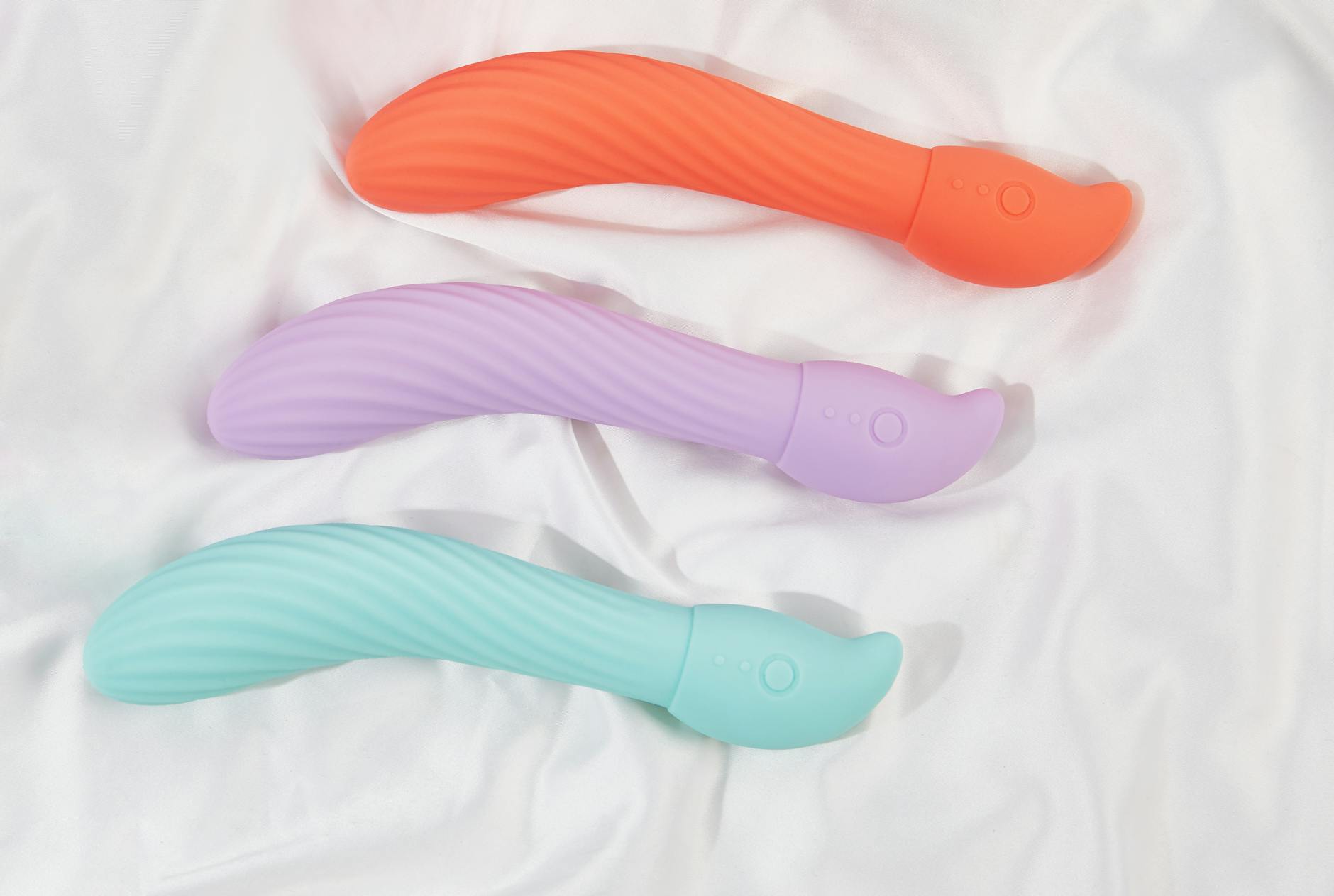
Photo by IFONNX Toys on Pexels
What menopause changes about arousal speed
Another shift that catches people off guard: arousal takes longer. The body's initial response to stimulation requires more time to build. This isn't a defect. It's a neurological change that most menopause guides gloss over or treat as a problem to solve.
I'd reframe it: it's an opportunity to slow down. Many people find that the longer build-up allows for deeper sensation and more room for mental engagement. But it does mean those quickie sessions that worked at forty might not get you there now.
With a lemon vibrator, the suction sensation is often strong enough to feel satisfying immediately, even during the arousal ramp-up. You're not stuck waiting for your body to catch up. You can feel progress from the first moments of use, which makes the building process feel rewarding instead of frustrating.
Lubrication and why it matters more now
Post-menopausal tissue produces less natural lubrication. This is real, and it affects both partner sex and solo play. Using a lemon vibrator doesn't exempt you from this reality, but it makes navigating it easier.
Because suction technology doesn't rely on direct friction, you need less lubrication than you would with a traditional vibrator to feel comfortable and sensual. A small amount of water-based lubricant is usually enough. You're not playing catch-up with your body's natural response. You're supplementing, not compensating.
Honestly, this alone is why so many people in menopause transition to lemon vibrators and never go back. The reduced-friction approach feels like less work, more pleasure.
Building a routine that works for menopausal bodies
Here's what I recommend to clients starting with a lemon clitoral vibrator after menopause:
Start with pattern one. The lowest setting. Not because you're fragile, but because your tissue is more responsive now. What felt subtle at forty can feel perfect at fifty-five.
Budget twenty minutes. Arousal takes longer. Remove the pressure to rush. This is actually a gift. Slower arousal often leads to longer, more satisfying sessions overall.
Use water-based lubricant liberally. Even if the Lem works well with less, using enough lubricant makes the whole experience more sensual and comfortable. Think of it as part of the ritual, not a workaround.
Experiment with the suction seal. Different positions and angles create different sensations. The tip of the clitoris feels different from the sides. Spend a session just exploring, not chasing orgasm. That exploratory mindset actually tends to produce better results.
Pay attention to pelvic floor tension. Menopause can tighten the pelvic floor, which reduces sensation. Spending a few minutes before you start to breathe and consciously relax that area amplifies what the vibrator delivers.
This isn't complicated. But it's specific, and specificity is what transforms pleasure from something you remember fondly to something you're actively enjoying right now.
The emotional piece nobody mentions
Menopause is also a psychological transition. Bodies change. Roles in relationships shift. There's grief, and there's also freedom. For people who spent decades managing fertility anxiety, hormonal mood swings, and the social script around being sexually available, menopause can feel like the first time in your adult life you're actually choosing pleasure for yourself.
That mental shift is real, and it's powerful. A tool like a lemon vibrator becomes less about fixing your body and more about claiming space for your own sensation, on your own terms, without apology.
If you have a partner, this is worth naming. "I want to explore this phase of my body" is a different conversation than "something's wrong with me." One invites them in. The other creates distance.
When to see a doctor
If you're experiencing pain, burning, or severe dryness even with lubricant, talk to your GP or gynecologist. Genitourinary syndrome of menopause is common and treatable, sometimes with topical estrogen creams that work quickly. You don't need to white-knuckle through discomfort.
Similarly, if desire has dropped to zero and you want it back, that's worth discussing. Testosterone therapy, though prescribed cautiously in some regions, can be genuinely helpful.
But pleasure sensitivity changes? Tissue thickness shifts? Arousal speed changes? Those are normal. They're not bugs. They're features of a different body, one that often has more capacity for deep sensation than you might expect.
Frequently Asked Questions
Can you use a lemon vibrator if you're on hormone replacement therapy?
Completely. HRT changes the pace of tissue changes but doesn't eliminate them. Some people on HRT find they need less lubrication; others don't notice much difference. The same principles apply. Start low, go slow, listen to what your body tells you.
How is a lemon clitoral vibrator different from a regular vibrator for menopause?
Traditional vibrators use oscillation or rotation, applying direct friction to delicate post-menopausal tissue. A lemon suction vibrator creates a gentle vacuum that stimulates without the same pressure. For thin, sensitive tissue, suction is generally more comfortable and produces more consistent sensation. That's why so many post-menopausal people report better results with suction technology.
Is it normal that sensation feels different than it did before menopause?
Completely normal. Estrogen changes the nerve sensitivity and tissue structure. Some people describe sensation as more localized, more intense in certain spots. Others say it takes longer to build but feels deeper once it does. There's no "right" way for menopause to affect pleasure. Different is just different.
How often should you use a lemon vibrator after menopause?
As often as you want to. Pleasure doesn't have a schedule. Some people use them a few times a week. Others use them almost daily. Regular use actually helps maintain tissue health and blood flow, so there's no downside to frequent use. Whatever frequency feels good to you is the right frequency.
Can a partner use a lemon vibrator on you?
Yes, absolutely. Some people find that partnered use feels more intimate because they can focus on sensation without the logistics of holding the device. Communication helps here. You know your body better than anyone else. Guiding your partner on pressure, speed, and positioning makes the experience better for both of you.
What if you don't like the sensation at first?
Give it three or four sessions before deciding. The sensation of suction is genuinely different from what most people are used to. Your body and brain need time to calibrate. Start with the lowest settings. Use plenty of lubricant. Spend a whole session just exploring without expecting orgasm. Often, by session three, people stop comparing it to other vibrators and start enjoying it on its own terms.
The bottom line
Menopause changes your body. That's fact. Whether it changes your pleasure depends on what tools you're working with and whether you're willing to adjust your approach. A lemon clitoral vibrator isn't a fix for menopause. It's recognition that menopausal bodies have different needs, and meeting those needs with the right technology makes pleasure not just possible but genuinely excellent.
Your best sexual life might not be behind you. It might be right in front of you, waiting for you to give it the space and the right tools to unfold. That's worth exploring.
If you're curious about how suction technology works, I've written more on <a href="/blog/why-lemon-suction-vibrators-work-better-for-sensitive-tissue">why lemon suction vibrators work better for sensitive tissue</a>. And if you're brand new to this style of vibrator, the guide to <a href="/blog/how-to-use-lemon-clitoral-vibrator-first-time">how to use a lemon clitoral vibrator for the first time</a> walks through technique step-by-step.
Questions about how Hello Nancy products might fit into your routine? Reach out at <a href="/contact">contact</a>. I'm here to help.