Let's name what happened
You had kids. Sex became a logistical puzzle nobody was interested in solving. That's not a failure. That's the most predictable plot point in long-term relationships, and almost no one talks about it honestly until it's been five years and you're wondering if you even like each other anymore.
Here's the thing though: you're not broken. Your desire didn't vanish. It got buried under 3 a.m. wake-ups, someone else's emotional needs, and the low-level exhaustion that feels permanent. Rebuilding intimate connection after parenting takes more than good intentions. It takes permission, time, and tools that lower the activation energy for pleasure.
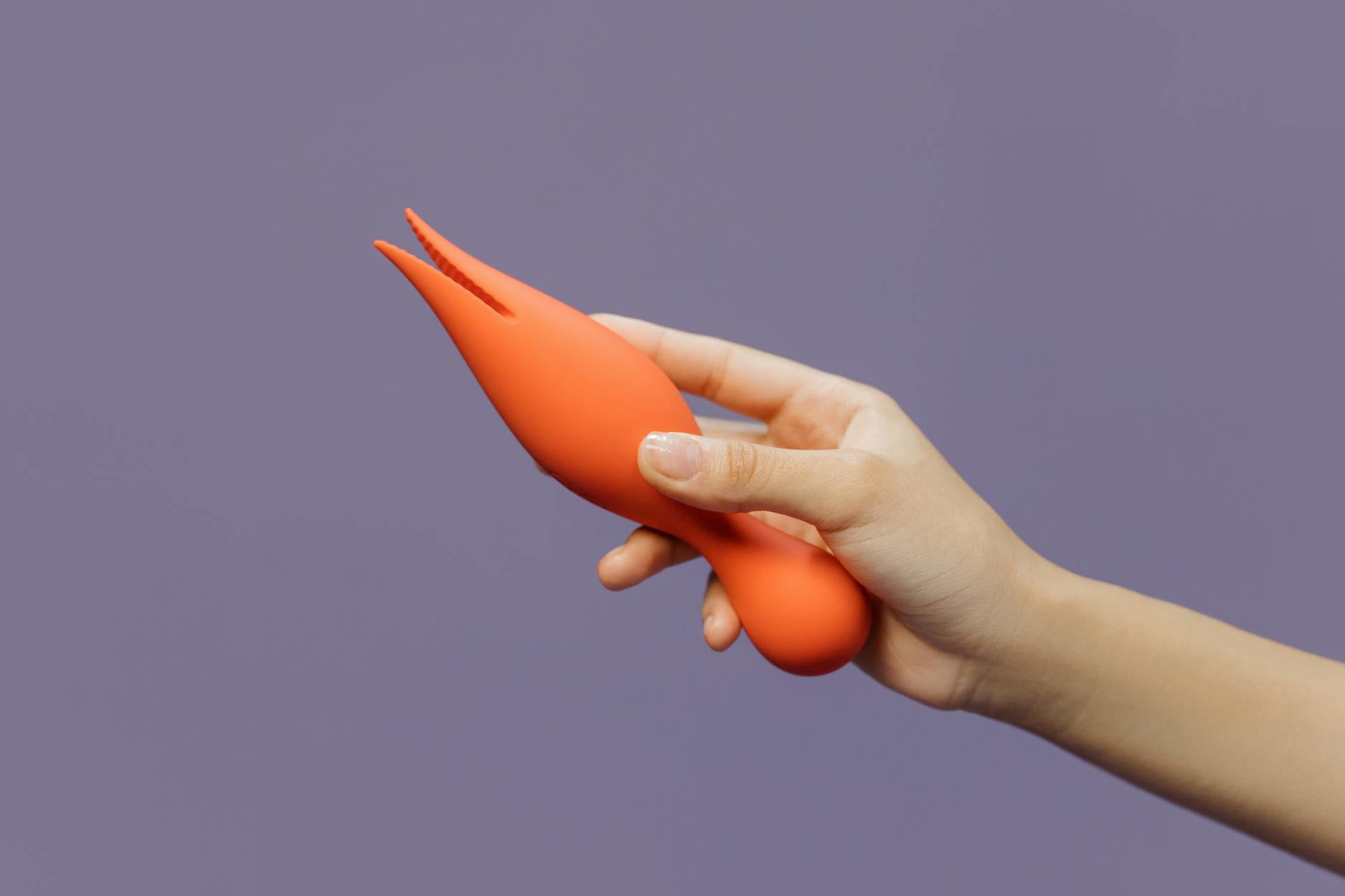
Lemon clitoral vibrators, specifically, can be that tool.
Why lemon vibrators work for couples, not just solo play
I'll be direct: most couples aren't using vibrators together because there's still shame around it, or because they assume toys are a sign that something's missing. Both are myths I spend my days unraveling in sessions.
A lemon vibrator works for couples because it does something traditional approaches don't. The suction technology in a lem vibrator creates sensation that doesn't require the same level of friction or positioning that penetrative sex demands. After years of interrupted sleep, caregiving fatigue, and bodies that feel like they belong to other people, that matters.
When I ask couples in their late thirties and forties what they need to get arousal going again, they say the same three things: "I need to feel wanted, not obligated. I need it to not take an hour. I need it to feel good without performance pressure." A lemon sucker checks all three boxes.
The physical sensation is distinct enough that it feels new, even in a long relationship. The novelty alone can break the pattern of avoidance. And because it's not about penetration or a specific sexual script, it creates space for both partners to stay present without sliding into the old role-play that stopped working years ago.
The mental shift that has to happen first
Before you buy anything, you need this conversation. Not during sex, not during a fight. Over coffee, without the kids, when you're both awake and nobody's defending anything.
The conversation is: "I miss us. Not in a guilty way. I actually think we could feel good again, and I want to try. I'm not expecting it to look like it did before kids. I just want us to have pleasure together."
That's it. That's the opener that works because it's not about blame or performance or proving something. It's just honest.
What happens next is the partner either says yes or raises the actual concern. Sometimes it's "I feel too tired." Sometimes it's "I don't feel attractive anymore." Sometimes it's "I'm worried this means something's wrong." All of those are real, and all of them deserve an answer that's not rushed.
The role of a tool like a lemon clitoral vibrator in that conversation is this: it's a permission slip. It's a physical thing that says "we are choosing pleasure, together, on purpose." That choice matters more than the object.
How to actually bring it into the bedroom
Don't make it a surprise. Seriously. Nothing kills the mood like a partner producing a vibrator from under the bed without context. You've already had the mental conversation, so the introduction is straightforward.
One of you says: "I got something I want to try together. It's called a lemon vibrator. It's designed for clitoral pleasure, so it's low-pressure and doesn't require anything we're not already doing. Want to explore it?"
Done.
When you do try it, the first time is not the time to have an amazing orgasm. The first time is about curiosity. Start slow. One partner holds it while the other experiences the sensation. Then switch. Talk about what feels good. There's zero performance pressure because you're literally just learning how your bodies respond.
Many couples find that once they use a lemon sucker together, the anxiety about sex starts to dissolve. You're not failing at some invisible standard anymore. You're just exploring what feels good right now, which is fundamentally different energy than "we should be having more sex."
Why the lem vibrator specifically works better than traditional toys
Traditional clitoral vibrators use direct vibration. They're effective, sure, but they can feel intense or even uncomfortable if you've been away from sex for years, or if hormonal changes have made tissue more sensitive.
Lemon vibrators use gentle suction combined with subtle vibration. The sensation is more diffuse, which means it's easier to stay in pleasure rather than chasing an orgasm at any cost. For couples coming back to sex after a long gap, that distinction is huge.
It also means you can experiment without one partner feeling like a prop. Because the sensation is about what's happening on the outside rather than penetration, both partners can engage equally. One person isn't just watching or receiving. You're both actively involved in creating the experience.
The conversation that happens after
This is where couples often disconnect again, and it's preventable. After trying something new together, your instinct might be to either pretend it was fine or to immediately judge whether it "worked." Skip both.
Instead: "That felt really good. I liked when we..." or "That was interesting. Next time I want to try..." Keep it light, keep it about sensation, keep it about wanting more of it.
Then schedule the next time. I know that sounds unromantic. It's actually the opposite. Knowing you're going to have sex on Thursday gives you both permission to look forward to it without the ambient pressure of "we should be doing this more."
What happens when you rebuild intimacy together
After three or four sessions of actual pleasure, something shifts. You remember that you like each other. Not in a sentimental way. In a physical, real way where your nervous system recognizes your partner as safe and pleasurable instead of just as a logistics co-pilot.
Couples who reconnect through tools like lemon clitoral vibrators often tell me that sex starts to feel like play again instead of a chore. They also tell me that everything else gets easier. Not because sex fixes relationships. But because pleasure is information. It tells you that you're still capable of wanting each other, which makes all the other hard stuff more navigable.
Your kids still interrupt. Work still demands things. But now you have proof that you and your partner aren't dead. You're just sleeping, and you're both choosing to wake up.
Common questions couples have
Will using a vibrator together make my partner feel inadequate?
Not if the framing is right. A vibrator isn't a replacement. It's an addition. You're not saying "I want this instead of you." You're saying "I want more pleasure with you." The lem vibrator isn't about what your partner can't do. It's about what you can both experience together that you haven't before.
What if one partner is enthusiastic and the other is hesitant?
That's actually honest. Start with curiosity instead of pressure. The hesitant partner might be worried about judgment, performance, or just doesn't see themselves as "that kind of person." Let them sit with the idea. Bring it up again in a month. Sometimes the resistance softens when there's no urgency attached.
How often should we be using a vibrator together?
Whatever rhythm you choose. For couples rebuilding after years of minimal sex, starting with once every two weeks or monthly takes the pressure off. You're not trying to become a couple that has frequent sex. You're trying to become a couple that has pleasure on purpose. Frequency matters less than consistency.
Can we use a lemon vibrator if we still have young kids?
Yes, but realistically. Hire a babysitter for two hours. Go to a hotel. Lock the door with a chair. Create actual time and space. Stolen five-minute sessions while listening for crying aren't reconnection. They're logistics.
Will this help if we're considering separation?
No. If the relationship itself is in question, rebuilding physical intimacy won't solve that. That's therapy work, not vibrator work. But if you're in a good partnership that just got buried under parenting, reconnecting physically can be the thing that reminds you both why you chose each other.
What if one partner has significantly lower desire than the other?
That's a separate conversation, and it's important. Mismatched desire is real, and it's not solved by a new toy. It might be hormonal, it might be depression, it might be that the relationship itself is the issue. Get help from a therapist who understands both neurobiology and relational dynamics. A lemon vibrator can support that work, but it can't replace it.
The real thing that changes
When couples use lemon vibrators or other sexual tools together intentionally, what actually shifts isn't the sex. It's the permission. You're explicitly saying: "We deserve pleasure. We deserve to feel good in our bodies. We deserve to keep wanting each other."
In a long relationship after kids, that's not small. That's everything. If you're ready to try, start with the conversation. The tool is just confirmation that you both meant it.
Have questions about how to start? We're here. Reach out and let's talk about what connection looks like for you right now.