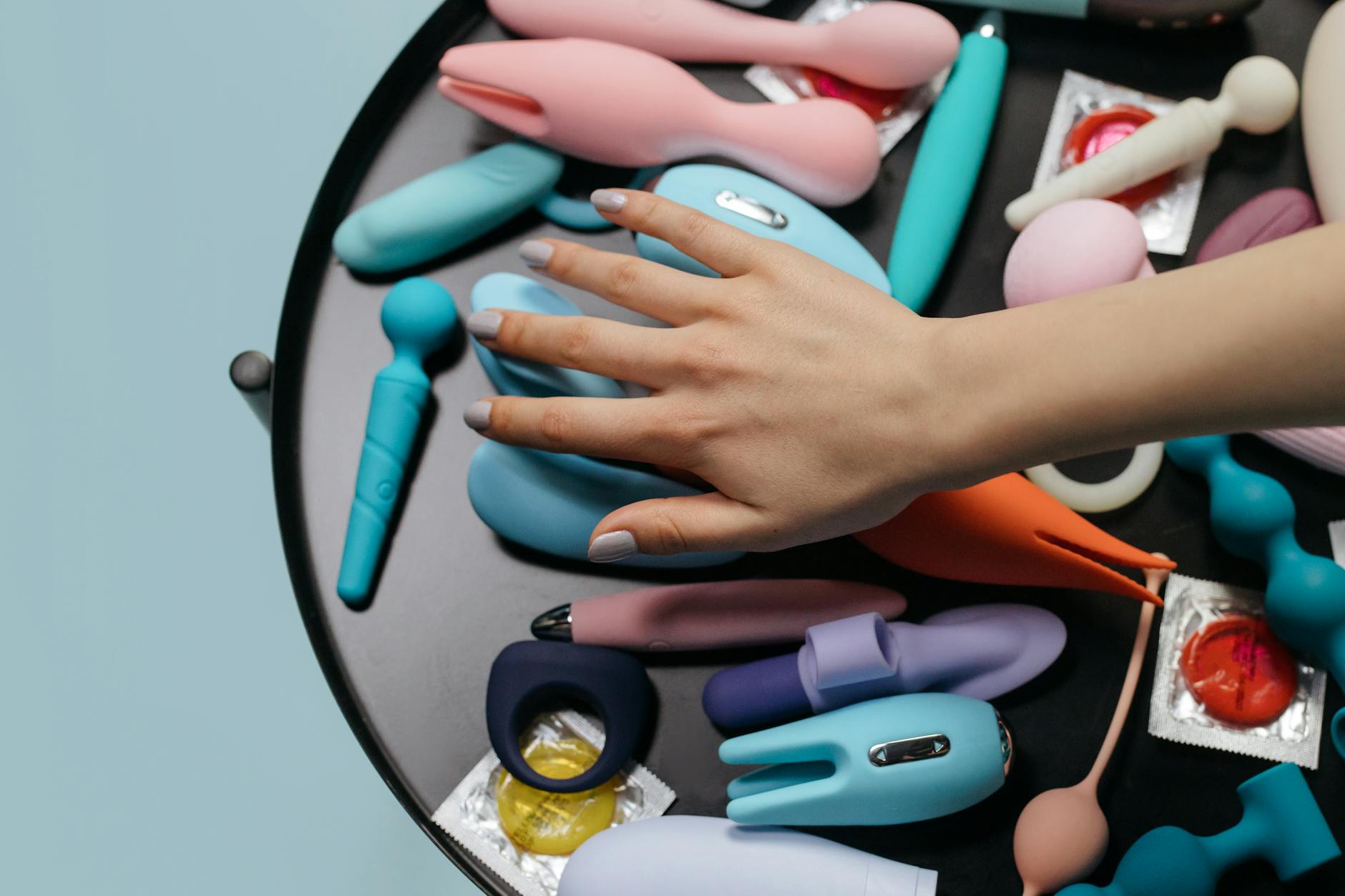
Here's what happens when couples try traditional vibrators together
One partner holds the bullet vibrator. The other person lies still, trying to relax. Within minutes, someone's arm gets tired. The angle doesn't feel right. The sensation starts to feel clinical instead of intimate. By the time anything good might happen, the whole experience has deflated into something that feels more like a medical procedure than connection.
Then someone suggests putting it down, and both partners feel a mix of disappointment and relief. This is not a failure on your part. It's a design problem.
Why traditional vibrators isolate instead of connect
Bullet vibrators and wands were engineered for solo use. The design assumes one hand, one body, one person controlling the pace and pressure. When a partner holds it, they're essentially performing a service. They're not experiencing pleasure. They're managing a tool.
The suction-based technology in lemon clitoral vibrators works completely differently. Instead of focused, high-frequency vibration, they use gentle air-pulse waves that stimulate a broader area of tissue. That distinction matters for couples because it changes what the experience feels like from the receiving end.
With a traditional vibrator, sensation is intense and precise. The person holding it controls whether you're at a 3 or a 9. With lemon sexual toys like the Lemon clitoral vibrator, the sensation feels more like sustained pressure and rhythm. You're less dependent on someone else's hand stability. The toy does more of the work.
The partnership shift that changes everything
When you use lemon vibrators together, the dynamic inverts. Because the stimulation is broader and the toy's design is forgiving, your partner can focus less on technical precision and more on presence. They can touch you elsewhere. They can kiss you. They can pay attention to your face and body instead of white-knuckling the toy to keep it at exactly the right angle.
I've watched couples describe this shift repeatedly. "I could finally relax," one partner said. "I wasn't holding my breath waiting for the angle to shift." Another couple reported that using a lemon sucker together actually felt more intimate than penetrative sex because both people were fully present and paying attention.
That's not rhetoric. That's a real difference in how your nervous system experiences touch and connection.
What makes lemon clitoral vibrators easier to use as a couple
The hand-fatigue problem disappears. Traditional vibrators demand steady pressure and positioning. Lemon clitoral vibrators need less active holding. Your partner can rest their hand more naturally and for longer without cramping.
The pressure anxiety vanishes. With a bullet vibrator, people worry constantly about pressing too hard or losing the angle. The broader stimulation area of air-pulse toys means small variations don't derail the experience. It's more forgiving.
Intensity feels shared instead of imposed. When your partner controls a bullet vibrator, they're essentially choosing how much sensation you receive at every moment. With a lemon vibrator, you're both responding to the same pattern. Your partner isn't managing your pleasure. You're experiencing it together.
Multitasking becomes possible. Because a lemon clitoral vibrator doesn't require constant micro-adjustments, your partner's other hand is free. They can caress you, hold you, or be touched themselves. Suddenly it's not a two-person production with one person as the crew.
How to introduce lemon vibrators into partnered sex
Start with conversation, not the toy. Tell your partner specifically what you're hoping for. "I want to feel closer to you, and I think a different kind of toy might help that happen," lands differently than "This vibrator isn't working."
Explore it together first, alone. Let your partner hold it while you give real-time feedback. Not "harder" or "softer," but "that feels good, try that pattern for a while." This teaches them where sensation lives in your body and builds their confidence before any pressure is involved.
When you're actually using it during sex or foreplay, start with lower intensity settings. This isn't because you need less stimulation. It's because lower settings are quieter, feel less urgent, and give both of you more room to focus on connection instead of the toy itself.
Check in during, not after. A simple "this is nice" or "I like this part" teaches your partner what's working without making them guess. Couples often avoid feedback because it feels clinical. It's the opposite. It's the most intimate information you can give.
The longevity shift nobody mentions
Here's something I've noticed working with couples: relationships that integrate toys tend to have longer, more satisfying sexual lives. Not because the toys are magic, but because introducing them requires the conversation. The conversation builds understanding. The understanding builds confidence. After a while, neither partner is anxious about performance or pleasure.
I've worked with couples who hadn't had sex in years, who introduced lemon vibrators together, and found their way back to intimacy. The toy was the entry point. The conversation was the real work.
When to get a second vibrator
At some point, you might find that having two lemon clitoral vibrators works better than one. One for you, one for your partner. This isn't about comparison or performance. It's about reciprocity. Both people get to experience pleasure simultaneously. Both people get to focus on connection instead of mechanics.
Many couples find that this shift, from "one toy being used on one person" to "we both have access to sensation," fundamentally changes how they experience sex together. Suddenly it's not a performance. It's a conversation.
Making it part of your normal rhythm
The goal isn't to make vibrators the centerpiece of every sexual encounter. The goal is to fold them into your repertoire so naturally that they're just another way you connect. Some nights you use them. Some nights you don't. Some nights your partner reaches for the lemon vibrator without asking because they know you enjoy it.
When this happens, you've moved past the novelty phase. The toy has become part of how you touch each other. That's when couples report that sex actually feels easier, more spontaneous, and more satisfying.
If you're curious about whether lemon clitoral vibrators might work in your relationship, start small. Read about them. Talk to your partner. Order one. Explore it alone first. Then, when you're ready, bring it into shared space without expectation. See what happens when you both have permission to focus on connection instead of technique.
People also ask
Can you use lemon vibrators during penetrative sex with a partner?
Yes, and many couples find it enhances the experience. Because clitoral stimulation happens simultaneously with penetration, sensation intensifies for the receiving partner. Your partner with a penis or strap-on can feel the vibrations indirectly through pelvic contact. The key is positioning. Some couples use lemon vibrators externally while penetration happens. Others use them before, during, or after penetration as part of foreplay. Experiment with what feels connected and comfortable for both of you.
Do lemon sucker vibrators work if my partner has performance anxiety?
Often, yes. Performance anxiety usually stems from worry about "getting it right." Lemon vibrators remove some of that pressure because the toy is doing significant work. Your partner isn't entirely responsible for your sensation. They're contributing to a shared experience instead of performing a specific service. This shift in responsibility often reduces anxiety dramatically. Plus, the conversation required to use a toy together builds confidence over time.
What if one partner wants lemon clitoral vibrators and the other doesn't?
Start by understanding why the reluctant partner is hesitant. Is it insecurity about their own ability to pleasure you? Is it discomfort with the idea of toys generally? Is it worry about what vibrators mean for the relationship? Each concern needs a different conversation. If it's insecurity, reassure them that you're using the toy to enhance shared pleasure, not replace them. If it's discomfort, suggest exploring it privately first. If it's meaning, clarify that toys are a tool for intimacy, not a statement about your relationship. Pressure doesn't work. Understanding does.
How is a lemon clitoral vibrator different from a wand vibrator for couples?
Wand vibrators are powerful but have a steep learning curve for partners. The broad head requires careful angling, and the intensity is often overwhelming initially. Lemon clitoral vibrators use air-pulse technology that feels gentler and more forgiving. They also require less active pressure from the person holding them. Both can work for couples, but clitoral suction toys tend to feel less clinical and more intimate. If your partner has never used a toy with you before, a lemon vibrator is often an easier entry point.
Can couples use a lemon vibrator if we have different sensitivity levels?
Completely. Lemon vibrators have multiple intensity settings, so you can adjust to what feels good for the receiving partner. The person using the toy can also control pressure and positioning. If one partner is more sensitive, lower settings and slower patterns work well. If the other partner wants more intensity, they can increase it. The beauty of clitoral suction toys is that they feel less jarring at lower settings than traditional vibrators, so both partners often find a comfortable middle ground faster. Communication matters here. Tell your partner what intensity and pattern feel best, and give them permission to ask if you're enjoying what's happening.
What's the best way to introduce lemon vibrators if we've never used toys together before?
Go slow and prioritize conversation over action. Start by talking about desire, not the toy. "I want us to explore new ways to feel close" opens differently than "I want to try a vibrator." When you buy a lemon clitoral vibrator, let your partner see it before you use it. Let them hold it. Ask what they think. Use it alone first, so they can hear it and understand what it feels like without pressure. When you do use it together, start in a low-pressure moment. Maybe foreplay where there's no expectation of orgasm. Let your partner get comfortable holding it and feel your pleasure response. Reassure them as you go. "This feels amazing, keep going" or "I love having you here with me" anchors the experience in connection rather than performance. The first time is always awkward. That's normal. The second time is usually much easier.