Let's talk about what nobody warns you about
Six weeks postpartum clearance. You got it. Then what? For most people, the answer is an awkward mix of "I should want this" and "but touching anything down there feels like a threat." That's not broken. That's biology.
Here's what actually happens to your body after childbirth, why most vibrators feel like the wrong choice, and why lemon vibrators, with their air-suction design, feel surprisingly doable when other toys feel impossible.
The physical reality of postpartum tissue
Your vulva, perineum, and vaginal opening have been through something intense. Whether you had a vaginal birth with or without tearing, an episiotomy, or a caesarean section, the surrounding tissue is inflamed, newly sensitive, and still healing. Blood flow is redirected. Nerve endings are firing. The tissue itself is thinner and more fragile than usual.
Adding to that: hormone levels have dropped dramatically. Estrogen, which keeps tissue plump and elastic, is way lower than it was during pregnancy. If you're breastfeeding, it stays low. That means tissue is drier, thinner, and more prone to micro-tears from friction.
Orgasms themselves, if they happen, can feel strange. The pelvic floor has been stretched. The sensation pattern is different. Some people report numbness. Others say touch feels sharper or more one-dimensional than before. None of this is permanent. But ignoring it and reaching for your old wand vibrator is how you end up with pain instead of pleasure.
Why traditional vibrators feel too intense
Wand vibrators and bullet vibrators work through direct friction and impact. They're designed for steady, strong stimulation. That's their strength. It's also why, on postpartum tissue, they often feel raw, aggravating, or painful.
The pressure itself is the problem. Your tissue is still healing. It's not asking for force. It's asking for gentleness. But gentleness with a wand usually means turning it way down, which makes it feel less effective, not more comfortable. You end up chasing sensation that isn't there.
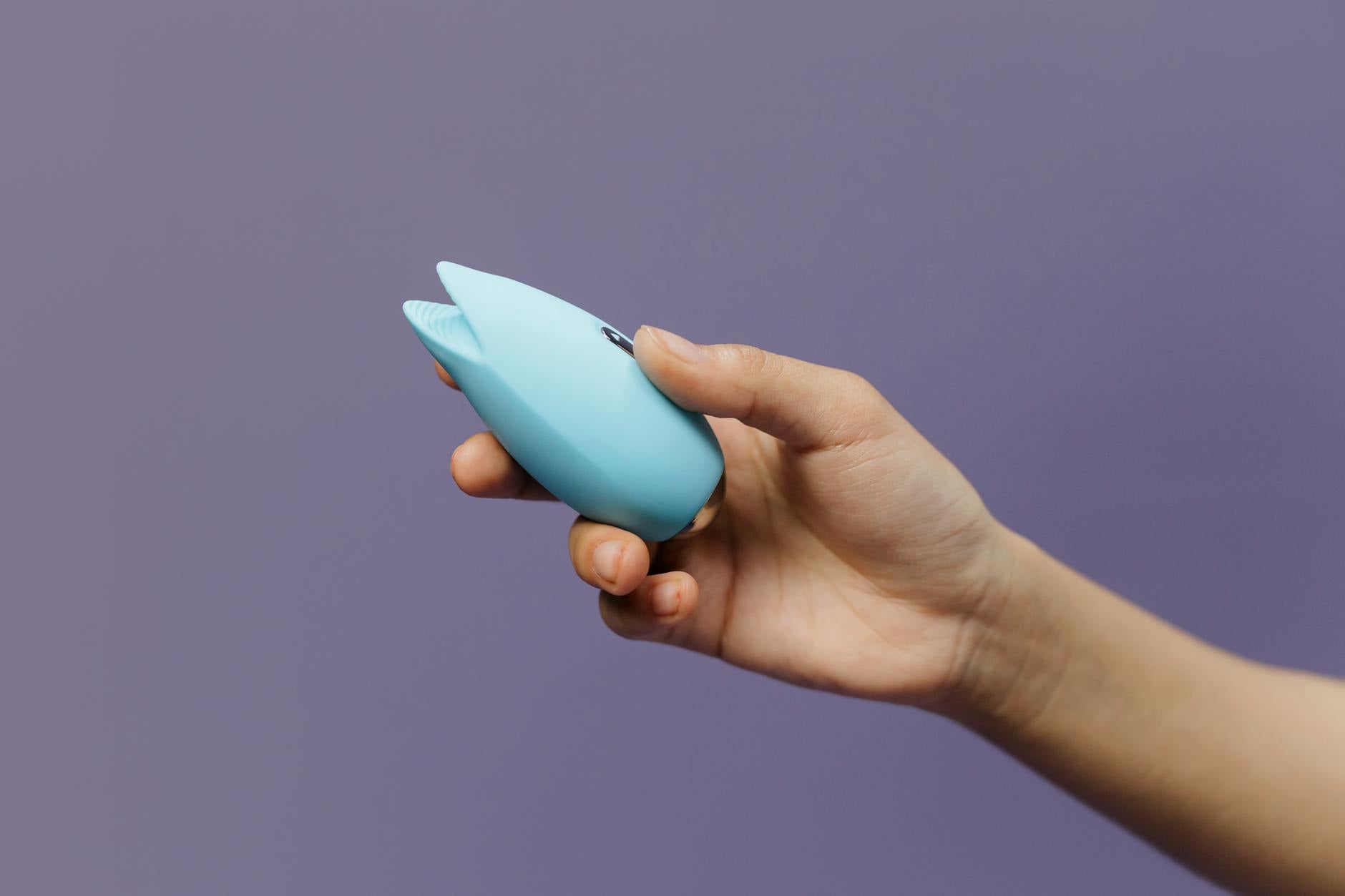
Lemon vibrators work differently. Instead of vibration, they use air-suction. The sensation is suction and release, not friction. That matters enormously for postpartum bodies. There's no grinding. No direct pressure on healing tissue. The stimulation comes from suction, which is gentler but still effective at triggering nerve endings.
Why air-suction feels different on healing tissue
Air-suction stimulation creates a seal around the clitoris and delivers gentle pulses of suction. The sensation is surrounding, not drilling. For postpartum bodies, this is transformative. You get strong sensation without harsh pressure.
Think of it like the difference between a deep-tissue massage and a lymphatic drainage massage. One is aggressive and relieving for tense muscle. The other is gentle and supportive. Postpartum tissue doesn't need aggressive. It needs supported.
Lemon vibrators, specifically, give you control over intensity in a way that matches how your body is healing. You can start at the lowest setting and feel genuine sensation instead of nothing. You're not fighting the toy to make it gentler. The base experience is gentler.
When you might still need to wait
Honest check: if you're still bleeding after six weeks, if you have active pain beyond tenderness, or if you feel shooting pain when you sit, wait longer. Six weeks is the medical clearance for penetration. That doesn't mean orgasm is comfortable yet. Your body might need eight, ten, or twelve weeks.
Same goes if you had a fourth-degree tear, a difficult birth, or significant perineal trauma. Ask your GP or midwife specifically about when clitoral stimulation is safe. They'll know your history. I won't.
How to start again, actually
First: warm your body. Shower, bath, or just time lying down. Blood flow matters. Postpartum bodies respond better to stimulation when they're warm and relaxed.
Second: use lubrication. Water-based, generously. Your body might not produce much yet, especially if you're breastfeeding. Extra lube isn't a failure. It's support.
Third: start with the lowest intensity. Lemon vibrators have multiple settings. Use setting one. You can always turn it up in five minutes. You can't unknow what too much feels like.
Fourth: keep sessions short. Fifteen minutes, tops. Your nervous system is still recalibrating. Shorter, gentler sessions help rebuild sensation without overwhelming tissue that's still healing.
What most people don't expect
A lot of postpartum people expect pleasure to feel exactly like it did before. It won't, at least not for a few months. That's not because anything is wrong. It's because your body has fundamentally changed. The pelvic floor is different. The tissue elasticity is different. The hormonal backdrop is different.
What often surprises people is that once your body settles, sensation can actually become more interesting. The pelvic floor, once it's healed and strong again, can create more nuanced sensations. The nervous system, once it's done panicking, can respond more intuitively. You're not rebuilding what you had. You're discovering what comes next.
The partner conversation
If you're with a partner, tell them this plainly: your body needs gentleness for now. Not forever. Right now. That means slower, softer, more focused on what feels supporting rather than what feels intense. A lot of partners read postpartum hesitation as rejection. Separate that conversation. "I need different things while I'm healing" is not the same as "I don't want to connect with you."
Many partners feel lost during postpartum recovery because nobody told them that their person's pleasure is literally reorganizing. A lemon vibrator, used solo or with a partner watching, can actually be reassuring. It shows that sensation is returning. That pleasure isn't gone. It's just arriving differently.
When to check in with someone
If you reach three months postpartum and pleasure still hasn't returned, mention it to your GP. Not because you're broken, but because sometimes postpartum hormonal shifts need support. Thyroid function, cortisol, prolactin, and estrogen all affect desire and sensation. A simple blood panel can catch a lot.
Same if you're experiencing pain with any stimulation by three months. A pelvic floor physical therapist can assess whether you need help releasing tension or healing scar tissue. These are common, fixable issues. Waiting and hoping doesn't usually solve them.
The permission you actually need
Your body isn't broken. Your body is doing exactly what it's supposed to do. Rebuilding takes time. Pleasure rebuilding takes longer than physical clearance. That's normal. That's not failure.
Lemon vibrators are designed for people who need gentleness without sacrificing sensation. After childbirth, when your body is asking for both safety and pleasure, that design actually matters. You deserve to feel good again. And you deserve toys that support that journey, not fight against it.
People also ask
How long after childbirth can you safely use a lemon vibrator?
After six-week medical clearance for penetration, air-suction stimulation like a lemon vibrator is generally safe. That said, listen to your body. If you're still experiencing active pain, bleeding beyond normal postpartum bleeding, or feel discomfort when sitting, wait longer. Some bodies need eight or ten weeks. Your midwife or GP can give you a personalized timeline based on how your specific tear or incision healed.
Can a lemon vibrator help with postpartum numbness?
Absolutely. Many people experience temporary numbness or altered sensation in the clitoral area after birth. Air-suction stimulation can help wake up those nerve endings gradually because it's gentler than friction-based vibrators. Start at the lowest intensity and use it consistently but gently. The sensation usually returns over two to four weeks as the tissue finishes healing and nerve inflammation settles.
Is it normal to feel pain when using a vibrator after childbirth?
Sharp or burning pain is not normal and shouldn't be pushed through. Tenderness, soreness, or that "too much" feeling is common. If you feel true pain, stop, wait a few more weeks, and try again. If pain persists after three months, see a pelvic floor physical therapist. Sometimes scar tissue or pelvic floor tension needs hands-on treatment. That's not rare. It's very treatable.
Should you use a lemon vibrator before or after the postpartum period ends?
Technically after six-week clearance. But "clearance for penetration" doesn't automatically mean clitoral stimulation is equally healed. Many people find clitoral sensation is comfortable earlier than penetration. If you're curious before six weeks, ask your midwife. Some will say yes to external stimulation. Others will ask you to wait. Their guidance matters more than a general timeline.
Can using a lemon vibrator too soon delay postpartum healing?
Not if you're careful. Gentle, infrequent use on well-lubricated tissue after six weeks doesn't impede healing. Aggressive or frequent use might irritate tissue and prolong inflammation. Keep sessions short, use plenty of water-based lubricant, and stop if anything feels raw. Your body will tell you if something's wrong.
What's the difference between a lemon vibrator and a wand for postpartum pleasure?
Wands use strong vibration through friction. That can feel intense or raw on postpartum tissue. Lemon vibrators use air-suction, which is gentler but still effective. For most postpartum people, lemon vibrators feel more comfortable earlier because there's no grinding pressure. That said, some people prefer wands once they're further along in healing. Start with what feels safest. You can experiment later.
Ready to feel good again
Postpartum recovery is long. Sexual recovery is its own timeline within that. You're not supposed to bounce back instantly. Your body needs time. It also deserves pleasure during that healing time, not just after it's over. Lemon vibrators are built for that gap. Gentle. Effective. Designed for bodies that need both safety and sensation.
If you have questions about what's normal or what to expect, reach out. We're here for this.