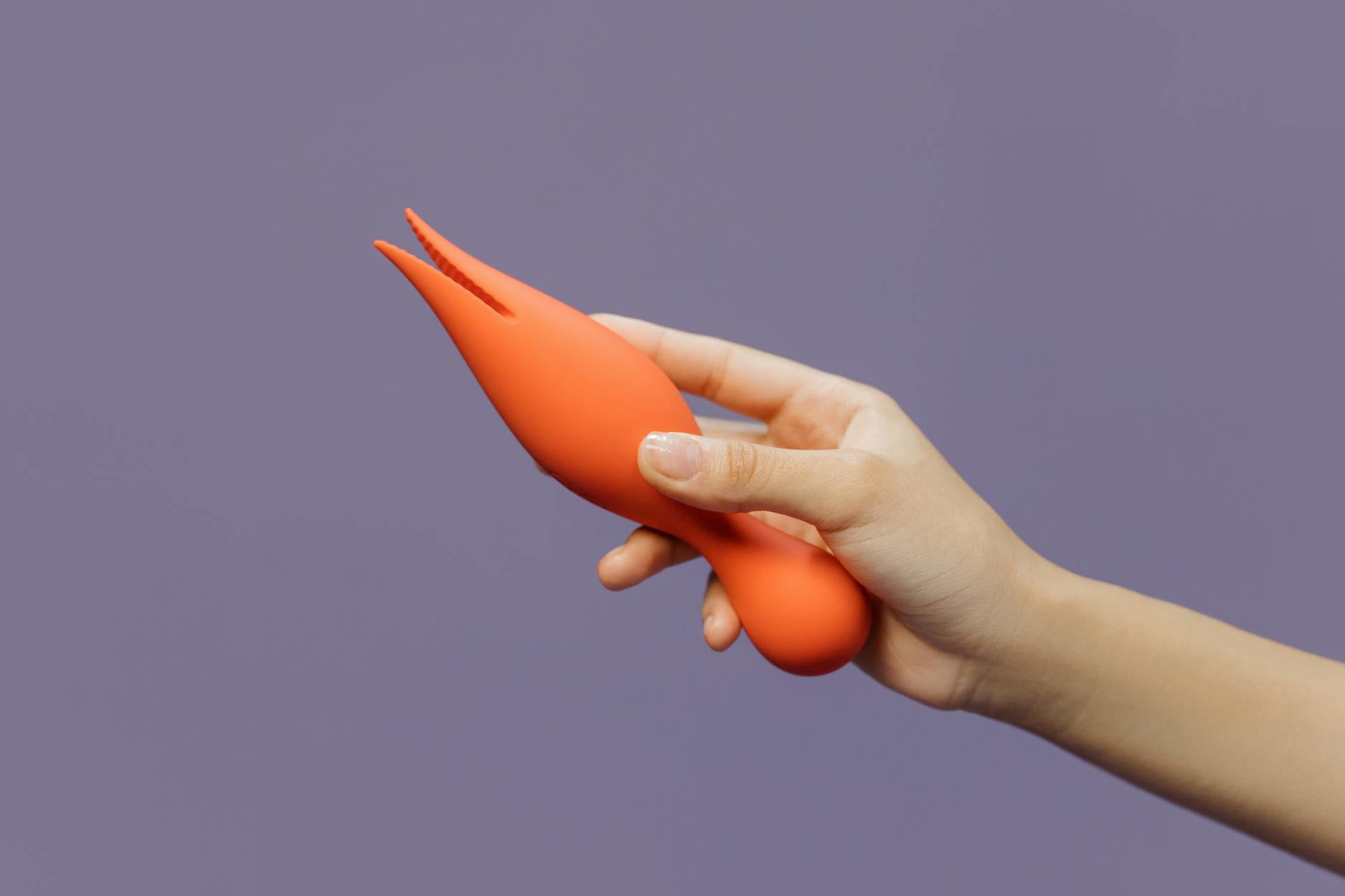
Here's the thing about muscle memory
Your body doesn't just know what feels good. It knows the specific pressure, speed, rhythm, and angle that gets you there. If you've been relying on manual stimulation for years, your nervous system has built a highway to orgasm that's deeply grooved. A lemon clitoral vibrator arrives and says, "Let's try this other path." Your brain essentially has to pause, check the map, and figure out if this new route works. Spoiler: it does. But it takes longer than you'd think.
This isn't a problem. It's just physiology. And there's a lot you can do about it.
Why the transition feels awkward at first
When you use your hands, you're controlling three variables simultaneously: pressure, speed, and angle. You adjust them in real time based on what your body tells you. You speed up when arousal builds. You ease off if sensation gets too intense. You shift angle by millimeters to find the exact sweet spot. It's micro-adjustments happening constantly.
A lemon vibrator, even the ones designed for maximum precision like the Lem, operates differently. The stimulation is constant. The speed is fixed (unless you're using adjustable patterns). Your clitoris is experiencing something more uniform and less responsive to your moment-to-moment feedback. This is actually a feature, not a bug. But your nervous system doesn't know that yet.
Your body has to learn that it doesn't need to be steering the ship. It can just receive.
The neural pathway recalibration
When arousal builds, your clitoris swells with blood and becomes more sensitive. The thousands of nerve endings there become more reactive. Manual stimulation lets you work with this escalation. You feel it happening and adjust your touch accordingly.
With a lemon clitoral vibrator, the stimulation stays constant while your sensitivity is changing. This creates a mismatch. In the first weeks, you might feel like the vibrator is either not intense enough or weirdly overpowering, sometimes within the same session. Neither of those is true. What's happening is your nervous system is still calibrating.
You're essentially learning to trust a rhythm that isn't yours.
The psychological layer (it's bigger than you think)
There's also a trust component here. Manual stimulation gives you a sense of control. You're the author of the sensation. A lemon sexual toy means you're surrendering some of that control to the device. Even if you consciously want that, your nervous system might be whispering, "Actually, can we go back to the thing we know works?"
This is especially true if you've never used a clitoral vibrator before. You might feel like you're "supposed" to come faster with a toy, which creates performance pressure. Then pressure kills arousal, which makes the vibrator feel less effective, which makes you anxious. The whole thing becomes self-defeating.
The antidote is patience, but patience with a purpose.
How long does the adjustment actually take
There's no universal timeline. Some people feel a shift in three to five sessions. Others need two to three weeks of regular use before a lemon vibrator starts to feel natural. A few take longer. The variation is totally normal and says nothing about your body or your capacity for pleasure.
Most of my clients report that somewhere around session six or seven, something clicks. The vibrator stops feeling like an external tool and starts feeling like an extension of what they're already doing. Arousal builds differently, but it builds. Orgasm, when it arrives, might feel slightly different. Sometimes shallower, sometimes more localized. Often, after a few weeks, more intense than what they were getting from manual stimulation alone.
Five concrete strategies to speed up the transition
Start with your hands first. Bring yourself to about 70 percent arousal using manual stimulation. Get yourself warmed up, in the zone. Then introduce the vibrator. Your nervous system is more flexible and open when you're already halfway there. This is not cheating. It's smart bridging.
Use it at lower intensities. Most lemon vibrators, including the Lem, have multiple speed settings. Spend your first few sessions on patterns one through three. You're not trying to reach orgasm faster. You're trying to teach your nervous system what the sensation feels like. Speed comes later.
Stay consistent. This is unglamorous advice, but it matters. Your body learns through repetition. Using the vibrator once a month won't teach your nervous system anything. Using it twice a week will. Consistency is what rewires the pathway.
Experiment with positioning and angle. Manual stimulation has positioned you in certain ways that work. A lemon clitoral vibrator might work better at a slightly different angle. Spend time figuring out if you prefer direct contact on the clitoris, or if you'd rather have the vibration work through the hood. Small positioning shifts can make a huge difference.
Manage expectations about orgasm. Your first few sessions might not end in orgasm, and that's completely fine. You're not failing. You're gathering data. Pay attention to what feels good, what feels weird, what makes arousal build, what kills it. This information is valuable even without the finish line.
Why the transition is actually worth it
Here's what I see on the other side of this adjustment period: people discover a different kind of orgasm altogether. Manual stimulation often builds in a very specific way. A lemon sexual toy, especially ones designed with suction or pulsation patterns, can trigger sensations that your hands alone can't reproduce. Some people report that clitoral vibrators unlock deeper pleasure, more full-body response, or just a different flavor of intensity.
You're not losing what you had with manual stimulation. You're gaining another tool that can work alongside it. Many of my clients find that they use both, depending on their mood and available time.
When to get external support
If you've been using a lemon vibrator consistently for four weeks and nothing feels good yet, and you feel frustrated rather than curious, it's worth checking in with yourself about what's happening. Sometimes the issue isn't the vibrator or your body. Sometimes it's stress, relationship friction, or just being in the wrong headspace.
If pleasure has completely disappeared and is replaced with numbness or pain, that's a signal to pause and maybe talk to someone. A therapist or sex coach can help you figure out what's underneath the resistance. There's always something worth exploring there.
What you need to know right now
Your body isn't broken. Your nervous system isn't stubborn. You're simply experiencing what happens when any complex system has to learn a new pattern. It's not instant. It's not seamless. But it's absolutely worth the short adjustment period, because on the other side of it is access to sensation and pleasure that might have been hidden from you before.
The Lem and other lemon clitoral vibrators are designed with this transition in mind. They're built to feel natural, not aggressive. Start slow, stay consistent, and give yourself the grace of not knowing what this is supposed to feel like. Your body will figure it out.
People also ask
How long does it take to adjust to using a vibrator if I've only used my hands before?
Most people feel a noticeable shift within two to four weeks of consistent use (two to three times per week). Some adjust faster. Some need six to eight weeks. The key word is consistent. Using a vibrator sporadically won't teach your nervous system anything. Your body learns through repetition.
Can I use a lemon vibrator and manual stimulation together while I'm adjusting?
Absolutely. In fact, I recommend it. Start with your hands until you're well aroused, then introduce the vibrator. This bridges the gap between what your body already knows and what it's learning. Over time, you might find you prefer the vibrator alone, or you might always combine them. Both are completely normal.
Why does the vibrator feel too intense when manual stimulation never did?
Vibration is a different sensation than pressure. It's more concentrated and constant. Your nervous system reads it differently. Starting on a lower intensity setting and gradually moving up helps. Also, make sure you're giving yourself adequate arousal time before introducing the vibrator. A barely-aroused vulva will find even gentle vibration overwhelming.
Is it normal if a lemon clitoral vibrator doesn't feel good after a week of use?
One week isn't really enough data. Neuroplasticity takes time. Your nervous system doesn't rewire in seven days. If you're feeling frustrated, that's worth examining. Are you stressed? Is your partner pressuring you about it? Is there some part of you that doesn't actually want to use a vibrator? Sometimes the issue isn't the device. It's everything around it.
What if I've always been able to orgasm with my hands but can't with a vibrator?
This is common during transition, and it usually resolves with time and consistency. But it's also worth examining whether you're putting pressure on yourself to orgasm on a specific timeline. Remove the goal of orgasm for a few sessions. Just explore sensation. Arousal is allowed to exist without a destination.
Does switching from manual to vibrator mean my body will stop responding to my hands?
No. Your nervous system can hold multiple pathways. You're not replacing manual stimulation. You're adding to your toolkit. Most people find that they use both, sometimes even in the same session.
Final word
The transition from manual stimulation to a lemon clitoral vibrator isn't always instant, but it's almost always worth it. Your body is capable of learning new pleasure patterns. It just needs time, consistency, and your patience. Give it that, and you'll likely find a whole new dimension to your pleasure waiting on the other side.
If you're struggling with the transition or have questions about what you're experiencing, I'm here. Reach out at /contact. There's nothing awkward about asking for support around pleasure and intimacy. That's literally what I'm here for.