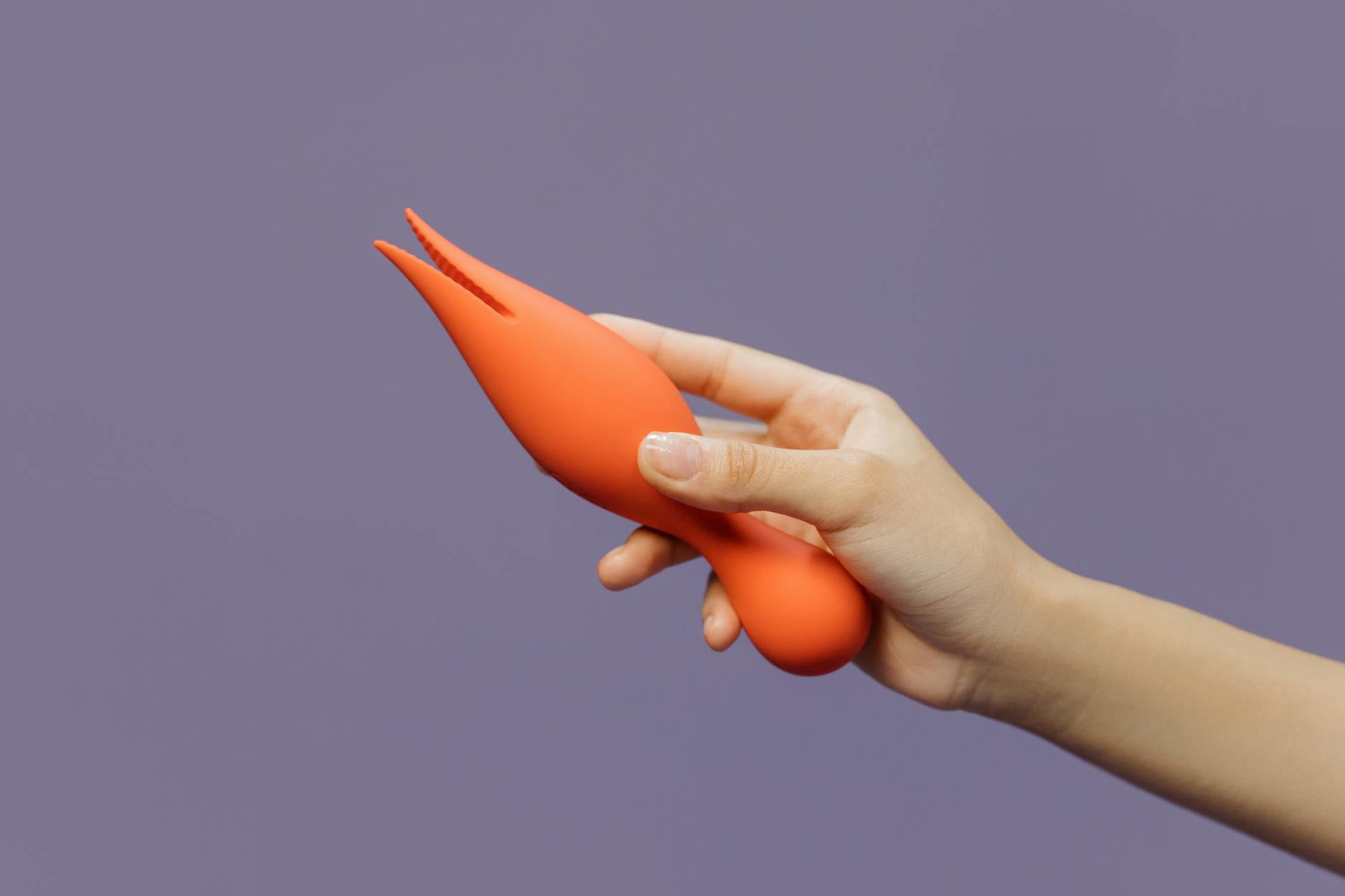
Let's talk about anorgasmia and what you actually need to know
Here's the thing nobody warns you about: if you've been struggling to reach orgasm, a lemon vibrator won't fix it in one session. That's not a failing of lemon clitoral vibrators themselves. It's just neurology, and understanding why matters way more than pretending it doesn't.
Anorgasmia, whether it arrived suddenly or crept in over time, rewires how your nervous system processes pleasure. That rewiring didn't happen overnight. Getting it to shift back takes real time, consistency, and usually some actual strategy beyond just grabbing a toy and hoping.
The neurology behind why sensation needs rebuilding
When you haven't reached orgasm for weeks, months, or years, your brain literally stops routing the same signals. It's not laziness. It's your nervous system being efficient. If an impulse hasn't led to a reward (in this case, orgasm) repeatedly, the pathway quiets down. Think of it like a hiking trail nobody uses. Eventually, trees grow back over it.
A lemon vibrator is incredibly effective at reactivating those pathways, but activation takes repetition. The suction mechanism on a Lem works differently from friction-based vibrators because it stimulates the nerve clusters around the clitoris without the pressure that often feels overwhelming to people with anorgasmia. But different doesn't mean instant.
Most therapists working with anorgasmia recommend 3 to 8 weeks of consistent use before you'll feel a meaningful shift. Some people feel something in week two. Others take twelve weeks. This isn't failure. This is your nervous system learning to trust pleasure again.
Why lemon vibrators specifically help rebuild the pathway
Three reasons the suction approach works better for anorgasmia than other lemon sexual toys or standard vibrators:
Gentler threshold activation. The suction creates a constant, rhythmic stimulus that doesn't require the same peak intensity as bullet vibrators. People with anorgasmia often have a threshold problem: the body feels overstimulated or underwhelmed, never quite landing in the zone. Lem's design sits in the middle ground.
Less mental interference. If previous vibrators felt too intense, you're already carrying tension into the next attempt. A lemon clitoral vibrator that doesn't trigger that protective tension means your mind can actually relax into it. And if your mind isn't fighting, your body can feel more.
Proprioceptive feedback. The suction sensation is distinct from what you've probably tried. That novelty can be genuinely helpful because it sidesteps the neural habits that led to the plateau in the first place. Your nervous system literally has to pay attention to something new.
But here's what's crucial: none of that happens without showing up repeatedly. One session with a lemon adult toy is data collection. Four weeks of consistent use is retraining.
What a realistic first month actually looks like
I tell people: expect nothing and celebrate small shifts. Week one with a Lem, you're learning how the sensation feels. Your body's probably not orgasming. That's completely normal. You're building familiarity, not pushing toward a goal.
Week two, arousal might start earlier. You might notice the sensation spreading differently. Some people feel more clitoral awareness without actual orgasm. That's progress. Your nervous system is waking up.
Week three, consistency matters more than intensity. Using your lemon vibrator twice weekly is better than once every ten days. Your body learns rhythms. It's not about duration; it's about regularity.
Week four, you might feel a shift in how quickly you warm up, or you might still not be orgasming. Both are totally valid outcomes. The point is that something is shifting neurologically, even if orgasm hasn't appeared yet.
And week six? Often that's where the breakthrough happens. Suddenly the suction sensation connects to something deeper. The pathway activates. It's not usually explosive. It's often confusing at first. People say things like "I think something happened" or "That felt different in a way I can't name." That's exactly right.
Why patience actually works better than pushing
The biggest mistake I see is people treating anorgasmia like a math problem to solve. Faster settings, longer sessions, more frequent attempts. That pushes you right back into the performance mindset that helped create the anorgasmia in the first place.
Here's the neurological truth: your body is protecting you from overstimulation through anorgasmia. If you came from a background of high-pressure sex, trauma, anxiety, or relationship disconnection, your nervous system created a reasonable solution. It shut down. Now pushing harder just tells it to shut down more completely.
Lemon vibrators work precisely because they let you approach pleasure gently. The suction is present and real, but it's not aggressive. You can use a Lem at a low pattern for twenty minutes and feel more than you felt with intensity-focused vibrators at high settings for two minutes.
This is why realistic timelines matter. If you expect results in one week, you'll get discouraged by week two and stop. If you expect eight weeks and see a shift in week five, you'll feel genuinely hopeful. Hope is actually neurologically relevant. Hopelessness shuts down reward pathways. So the expectation-setting itself is part of the mechanism.
The role of external circumstances you can't ignore
Anorgasmia almost never lives alone. It usually shows up alongside stress, relationship tension, depression, medication side effects, or unprocessed emotional stuff. A lemon vibrator can't fix your job stress or your anxious attachment pattern or your SSRI's libido dampening.
What it can do is give you a consistent, pleasurable sensation while you're also addressing those other pieces. If you're using a Lem once a week but you're also in a relationship where you feel unheard, the Lem won't create an orgasm for you. But if you're using the Lem regularly while you're also doing couples work or therapy or whatever the actual root is, then the Lem becomes a tool in a larger strategy.
Sometimes the timeline gets longer because the other piece is bigger. That's not a failure of lemon clitoral vibrators. That's just honesty about how pleasure works in actual human bodies living actual human lives.
What consistency actually means (and what it doesn't)
Consistency doesn't mean every day. In fact, daily use can lead to desensitization, especially in the early weeks. Twice weekly, every third day, or a regular weekly rhythm is where most people find the sweet spot with a lemon vibrator.
Consistency also doesn't mean "I must orgasm each time." That's the opposite of what helps. Consistency means showing up without a specific outcome attached. You're touching yourself with a tool designed for pleasure. Sometimes orgasm arrives. Often it doesn't, not yet. Both are fine.
What consistency does require: you actually use the thing. Not theoretically. Actually. That means setting a realistic reminder, protecting twenty minutes of privacy, and following through when you'd rather scroll or sleep. That boring part is where the magic happens.
When to check in with a professional
If you're six weeks into regular use with a lemon vibrator and there's absolutely no shift, or if anorgasmia appeared suddenly after medication or a procedure, talk to your doctor. Sometimes anorgasmia is a symptom of something else. Thyroid issues, vitamin deficiencies, hormonal imbalances, or medication interactions can all cause it. No vibrator, not even a Lem, fixes those.
If the anorgasmia is rooted in trauma or relationship dynamics, a sex-positive therapist or couples counselor is genuinely worth the investment. A lemon adult toy is an excellent tool, but it's not a substitute for processing real stuff that your nervous system is protecting you from.
The patience payoff
People who give lemon vibrators twelve weeks of consistent, low-pressure use report not just orgasm, but a completely different relationship with their own pleasure. The shift isn't just mechanical. It's neurological, psychological, and often relational too.
You're not just training your body to orgasm again. You're rebuilding trust in your own sensation, patience with your own timeline, and permission for pleasure without performance. That foundation matters more than the orgasm itself.
People also ask
How long does it usually take for a lemon vibrator to work for anorgasmia?
Most people notice a meaningful shift between four and twelve weeks of twice-weekly use. Some feel something earlier; others need more time. The timeline depends on how long you've had anorgasmia, what caused it, and what else is going on in your life. The key is consistency, not speed.
Can using a lemon clitoral vibrator too much make anorgasmia worse?
Daily use, especially with high-intensity settings, can lead to desensitization rather than healing. The nervous system needs rest and variation. Twice weekly with pattern changes and lower intensities gives you benefit without burnout. If you're using a Lem more than five times a week and still not getting results, pull back to three times weekly instead.
What if I've used other vibrators and they didn't help, will a Lem be different?
Likely yes, because the suction mechanism works differently than friction-based or wand vibrators. Many people with anorgasmia find that the gentler approach of a lemon vibrator succeeds where more intense toys failed. But if no vibrator has ever created sensation, the anorgasmia is probably rooted in something other than just needing the right toy. That's when professional support matters.
Is there a way to speed up results with a lemon vibrator?
Not productively. Pushing harder, using it more frequently, or expecting faster results usually backfires by creating performance pressure. What does help: using it consistently but gently, staying relaxed while using it, creating privacy and time to explore, and addressing any external stressors if you can. The slowest approach is often the fastest.
Should I use a lemon vibrator alone or with a partner when I have anorgasmia?
Start alone if anorgasmia is linked to performance anxiety. Solo exploration removes the pressure to perform and lets your nervous system focus purely on sensation. Once you've had some solo wins with a Lem, you can absolutely explore with a partner if that feels right. But the first part of rebuilding usually works best in private.
What settings should I use on a lemon vibrator when dealing with anorgasmia?
Start at pattern one or two with low intensity. Your goal isn't to find the strongest setting; it's to find the setting that feels present without overwhelming your system. Many people with anorgasmia respond better to lower patterns used longer. Spend three to five minutes on one pattern before adjusting. Let your body guide the pace rather than pushing toward higher numbers.
Final word
Anorgasmia is frustrating, and I know the desire to fix it quickly is real. But your nervous system didn't create this pattern overnight, and retraining it takes real time. A lemon vibrator gives you a tool that actually matches how anorgasmic bodies respond. The rest is patience, consistency, and genuine permission to let it take as long as it needs.
If you're ready to start and want support or have questions about your specific situation, reach out. That's what we're here for.