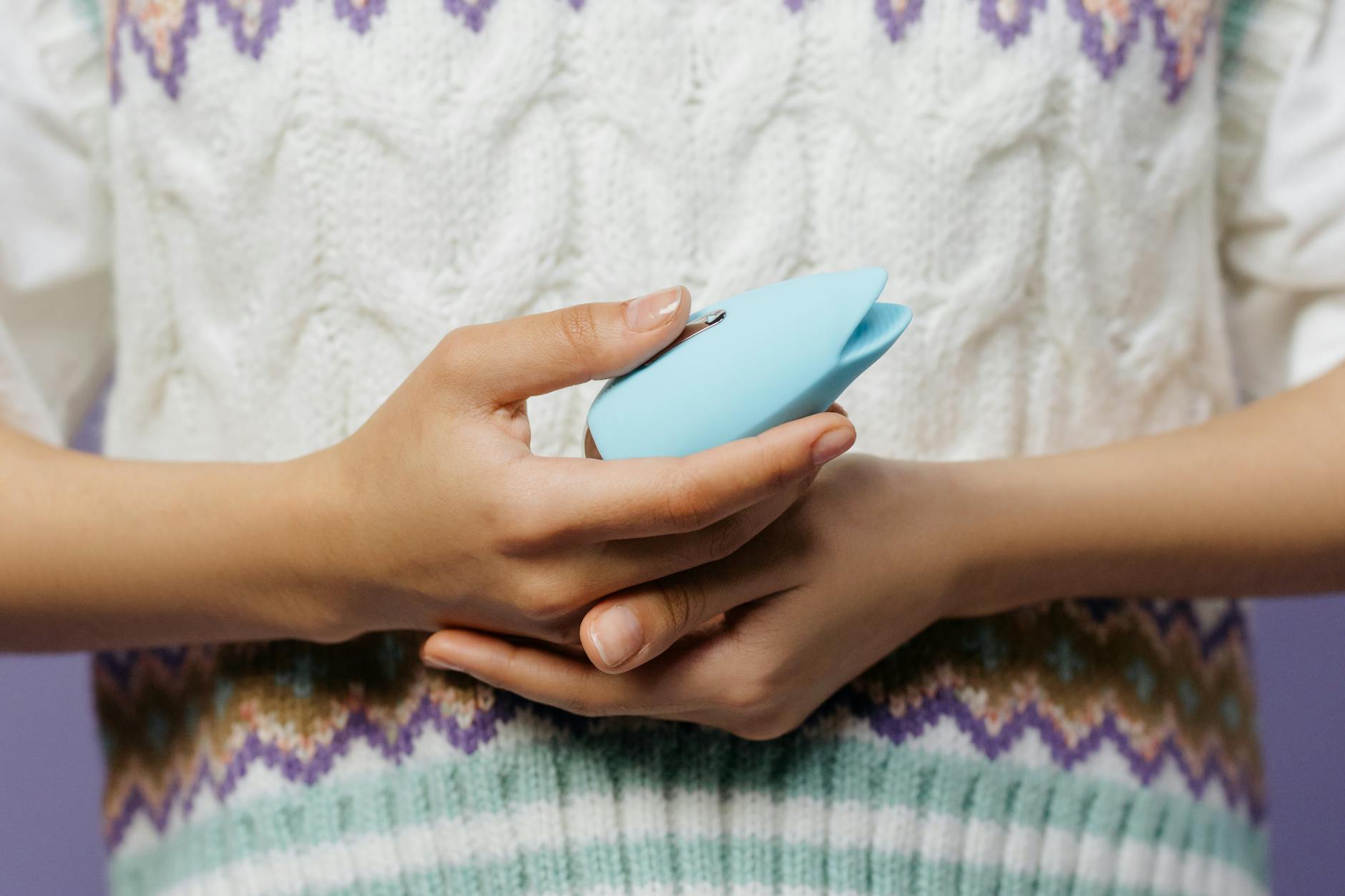
Sex anxiety is real, and it kills arousal
Let's be real. When you're anxious during sex, your nervous system goes into high alert. Your pelvic floor tightens. Your breathing becomes shallow. You drift out of your body and into your head, playing out disaster scenarios that have nothing to do with what's actually happening. Your partner notices. You notice them noticing. And now you're anxious about being anxious.
This is not a character flaw. This is neurobiology. When your brain perceives a threat (real or imagined), it hijacks the arousal system. Blood flows away from your genitals and into your limbs. Your body literally cannot achieve the relaxation needed for pleasure.
Here's what most people don't know: lemon clitoral vibrators are exceptional tools for breaking this cycle. Not because they're magic, but because they work with your nervous system instead of against it.
Why anxiety disrupts arousal in the first place
Your nervous system has two main modes: sympathetic (fight or flight) and parasympathetic (rest and digest). Sex requires parasympathetic activation. Anxiety keeps you locked in sympathetic mode.
When you're stuck in anxiety, your brain's threat-detection system is screaming. You're monitoring your partner's reactions. You're worried about how your body looks or whether you're taking too long. You're replaying past painful experiences or rejection. You're thinking about a work deadline. Any of these pulls you out of the present moment.
The problem with traditional vibrators during this state is that they require you to stay engaged with the goal. You're waiting for the orgasm that validates the whole experience. But when anxiety is high, orgasm becomes a performance target instead of a byproduct of pleasure. This creates even more pressure.
How suction vibrators work differently with anxiety
Lemon vibrators use air-pulse suction technology instead of direct vibration. This distinction matters when anxiety is present.
With a traditional vibrator, the sensation is constant and requires sustained mental engagement. You're managing intensity. You're thinking about rhythm. Your brain stays task-focused.
With a lemon clitoral vibrator, the sensation is rhythmic and pulsing. This rhythm naturally entrains your nervous system. Your breathing begins to match the pattern. Your body relaxes into the pulse. Your brain shifts from goal-oriented thinking into sensory-present thinking. You're no longer performing; you're receiving.
Research on rhythmic stimulation shows it activates the parasympathetic nervous system more effectively than constant stimulation. For people with anxiety, this is the difference between staying in your head and coming back into your body.
Building a grounding protocol with the Lem
Here's a step-by-step approach that works particularly well for anxiety-prone people.
Start solo, always. Anxiety during partnered sex is easier to manage if you've first built comfort with the sensation alone. Spend 3-5 sessions exploring the device by yourself, with no pressure to reach any outcome. This teaches your nervous system that this sensation is safe.
Use the lowest setting. On a lemon vibrator, begin at intensity 1 or 2. Low intensity allows your nervous system to acclimate without feeling overwhelmed. Many people with anxiety jump to higher intensities thinking they need to "feel something" to justify the experience. The opposite is true. Start low enough that you can stay relaxed.
Focus on breath, not sensation. This sounds counterintuitive, but it works. Place the lem, turn it on, and spend the first minute just watching your breath. Don't try to feel pleasure. Just breathe. Your nervous system interprets deep, steady breathing as a signal that you're safe. This is involuntary parasympathetic activation.
Use the pulsing to anchor attention. As the vibration plays, let your attention rest on the rhythm itself. Not the sensation, not the goal. Just the pulse. This keeps your brain's threat-detection system quiet by giving it something neutral to focus on. It's similar to meditation, except the meditation object is physical sensation instead of a mantra.
Set a time limit. Anxiety people often stay in sessions too long, waiting for something to happen. Commit to 15 minutes, then stop. This removes the performance pressure and signals to your nervous system that this is safe, bounded play.
When to involve a partner
Once you're comfortable solo, partnered use becomes possible. But approach it differently than you might with traditional vibrators.
Tell your partner explicitly that the goal is not an orgasm. The goal is to stay in your body and practice presence. This single statement removes the spectator pressure that fuels anxiety.
Have your partner hold the lem for you. Not as a sex act, but as care. They're literally in charge of the stimulation while you focus purely on breathing and sensation. This role reversal softens the performance anxiety because you're receiving something, not achieving something.
If intrusive thoughts arrive (they will), don't fight them. Acknowledge them and gently return attention to the rhythm of the vibration. Your partner can help: "I'm here. We're just breathing together." Simple words ground you faster than any internal reassurance.
The body-reconnection work
Anxiety creates dissociation. You leave your body to avoid feeling trapped in it. Lemon clitoral vibrators reverse this.
Because suction stimulation creates a distinct, rhythmic sensation, your brain has to acknowledge the physical reality of the moment. You can't think about work and also feel a pulse of suction. The sensation demands presence.
Over time, this repeated practice (solo, low-pressure, rhythmic, time-limited) teaches your nervous system a new truth: this sensation is safe. Your body is safe. Pleasure is safe. You're rewiring the threat response that was hijacking your arousal.
Many people with anxiety report that after 4-6 weeks of consistent solo practice, intrusive thoughts during intimacy become quieter. Not gone, but quieter. And quiet is enough to let arousal return.
When anxiety is deeper than surface-level
If your anxiety is rooted in trauma, relationship rupture, or significant depression, a vibrator alone won't solve it. How Lemon Vibrators Help Rebuild Pleasure After Painful Sex or Trauma addresses deeper trauma-related disconnection, while working with a trauma-informed therapist is essential.
If anxiety appears suddenly where it didn't exist before, something may have shifted in your relationship or your body. How Lemon Vibrators Help Partners Reconnect After Emotional Distance explores relationship-specific anxiety, and a couples therapist can help you identify the root.
If you're on a new medication or your anxiety feels neurochemical (racing thoughts, constant panic), talk to your doctor before anything else. Some psychiatric medications affect arousal; switching timing or dosage can help.
A lemon vibrator is a tool for the anxiety you can manage with grounding and presence. It's not a replacement for treatment when something deeper is happening.
The permission you're actually looking for
Most people with sex anxiety are waiting for external permission to slow down and prioritize their own nervous system regulation. Here it is: you don't have to perform. You don't have to come. You don't have to prove anything.
Sex can be slow, low-pressure, and focused entirely on your body's safety and returning to sensation. That's not selfish. That's the only way your nervous system will trust enough to let arousal happen again.
A lemon clitoral vibrator is just the tool. The real work is learning to stay present with yourself.
People Also Ask
Can you use a lemon vibrator if you have panic attacks during sex?
Yes, with one adjustment: build your practice during calm moments, not when you're already activated. If panic attacks happen mid-intimate time, your nervous system is already dysregulated. Practice with the lem when you're alone, relaxed, and have zero pressure to perform. This trains your body that the sensation is safe. When you eventually use it with a partner, your nervous system has stored that safety memory and is less likely to spike into panic.
How long does it take to feel less anxious using a lemon vibrator?
Most people notice a shift in mental quietness within 4-6 weeks of consistent solo practice (twice weekly, 15 minutes). Physical arousal often takes longer to return, sometimes 8-12 weeks. Patience with the timeline reduces the pressure that feeds anxiety in the first place.
Should you tell your partner you're using a lemon vibrator for anxiety management?
Yes. Secrecy fuels shame, which fuels anxiety. A simple conversation: "I've been having some anxiety about sex, and I'm using this tool to help my nervous system relax. It's about me reconnecting with my body, not about you." Most partners appreciate the honesty and feel less responsible for "fixing" your anxiety.
What if the vibration itself triggers anxiety?
Try starting without turning it on. Just hold it, get used to its weight and presence. When you're ready, use the lowest setting for 30 seconds only. Anxiety-prone nervous systems sometimes need even gentler entry points than others. Shorter, lower, slower is always an option.
Can you use a lemon vibrator if you have both anxiety and low sensation?
Absolutely. The rhythm of suction often activates sensation even when anxiety dampens it. The parasympathetic activation from the pulse can actually restore sensation faster than traditional vibrators because your nervous system is less defended. Start low and slow, just as you would for pure anxiety.
Is there a difference between situational anxiety and general sex anxiety?
Yes. Situational anxiety (nervous with a new partner, anxious in a new living space) responds quickly to grounding tools like the lem. General sex anxiety (rooted in past relationships, body image, or trauma patterns) is usually slower to shift and often benefits from therapy alongside tools. Both can improve, but general anxiety may need professional support.
The Path Forward
Anxiety during sex is not permanent. It's a signal that your nervous system learned something was unsafe. You can teach it differently.
A lemon clitoral vibrator helps because it gives your nervous system a clear, rhythmic signal to focus on. Not a goal. Just sensation, breath, and the pulsing of something designed to help you feel safe in your own body.
Start slow. Start alone. Start with low intensity. Let your body remember that pleasure is possible without performance. That's where the real work happens.